

Denmark's prime minister calls early election amid Greenland tensions
Denmark's prime minister calls early election amid Greenland tensions
- The Danish Prime Minister announced a general election to take place on March 24, 2026.
- This decision was influenced by the recent standoff with the U.S. over Greenland's status.
- The upcoming election is viewed as decisive for Denmark's future direction.
Story
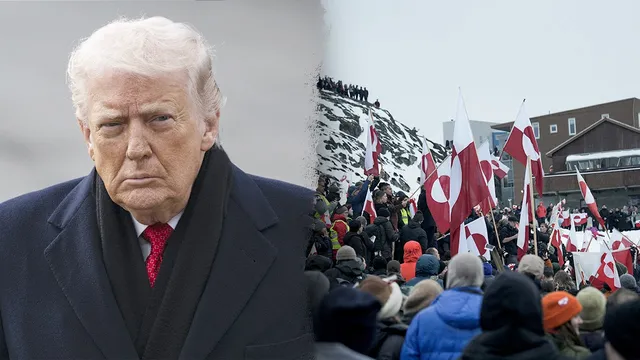
Denmark is set to hold early elections on March 24, 2026, as the nation grapples with rising tensions surrounding its relationship with the United States, specifically concerning Greenland. Prime Minister Mette Frederiksen made the announcement in parliament, stating that the handling of recent challenges has galvanized support for her party, the Social Democrats. This situation arose after U.S. President Donald Trump's controversial attempts to acquire Greenland, causing significant unrest among Danish citizens, many of whom have participated in protests against American influence and expressed concerns over territorial integrity. The Greenland crisis has had a noticeable impact on Danish politics, with polls indicating a spike in popularity for Frederiksen's government during the height of the tensions. As nationalist sentiments grew, the Danish public engaged in boycotts and demonstrations in protest of Trump's provocative remarks about seizing Greenland. The prime minister’s tough stance has seemingly played well with voters, who are now faced with a crucial decision on the direction the country should take in the next four years. Frederiksen emphasized the importance of this election, framing it as a moment for Denmark and Europe to assert their independence, particularly in light of external pressures from the U.S. As the Danish government prepare for the election, political analysts note that while Trump's figure may not be at the forefront of campaign discussions, his actions have indirectly shaped the political landscape, becoming a backdrop for discussions on national competence and security. Moreover, the geopolitical context surrounding Greenland's strategic importance has increased in recent years. As the U.S. has sought to counter Russian and Chinese ambitions in the Arctic, the Danish government reacted by initiating discussions on improving Arctic security. This has led to a broader conversation about defense spending and Europe's security posture, adding further relevance to the upcoming elections. Frederiksen's rhetoric suggests that Danish voters understand the need to engage seriously with the challenges presented by global superpowers, which could significantly redefine the nation’s future trajectory.
Context
The impact of the Greenland crisis on Denmark is multifaceted, involving environmental, economic, and geopolitical dimensions. With significant portions of Greenland's ice sheet melting due to climate change, rising sea levels pose an existential threat not only to Greenland but also to low-lying areas in Denmark and around the world. As ice continues to melt, the release of freshwater into the ocean disrupts marine ecosystems and alters weather patterns, leading to a cascade of environmental changes that can profoundly affect Denmark's climate and agricultural productivity. The urgency of addressing these changes places environmental sustainability at the forefront of Denmark's political and social landscape, prompting calls for immediate action to prevent further deterioration of Greenland's ice and to mitigate climate impacts on its own territories. Economically, the Greenland crisis presents both challenges and opportunities for Denmark. The potential for increased shipping routes through the Arctic, as ice recedes, offers new economic prospects but also raises questions about maritime sovereignty and ecological preservation. Danish businesses may find new opportunities in Arctic resource extraction, tourism, and shipping, prompting a shift in investment focus. Nevertheless, reliance on these sectors could complicate Denmark’s commitment to sustainability, leading to a dual challenge of balancing economic interests while adhering to international environmental standards. The far-reaching economic implications necessitate careful consideration of how to navigate Greenland's natural resources responsibly, ensuring that Denmark acts as a steward rather than an exploitative entity in the region. Geopolitically, the Greenland crisis has instigated heightened interest and competition among global powers in the Arctic region. The strategic importance of Greenland, particularly in terms of military and economic influence, has drawn attention from nations such as the United States, China, and Russia. Denmark, being responsible for Greenland’s foreign policy, finds itself in a position where it must navigate complex international dynamics that could affect its sovereignty and security. The potential for increased military presence in the Arctic due to shifting geopolitical interests raises concerns about international cooperation and conflict. It is vital for Denmark to maintain diplomatic relations and advocate for peaceful engagement in the face of evolving power struggles over Arctic resources and trade routes. Lastly, the interconnected nature of the Greenland crisis demands a cohesive and proactive approach from Denmark. This entails not only addressing the immediate impacts of climate change but also preparing for long-term adaptations in both policy and infrastructure. Public awareness and engagement are critical components in shaping national discourse around climate resilience and sustainability. As Denmark moves forward, its ability to position itself as a global leader in climate action while maintaining cooperative relationships with Greenland’s indigenous populations underscores its commitment to ethical governance. A comprehensive strategy addressing environmental, economic, and geopolitical challenges is essential to mitigate the impacts of the Greenland crisis and secure a sustainable future for both Greenland and Denmark.


