

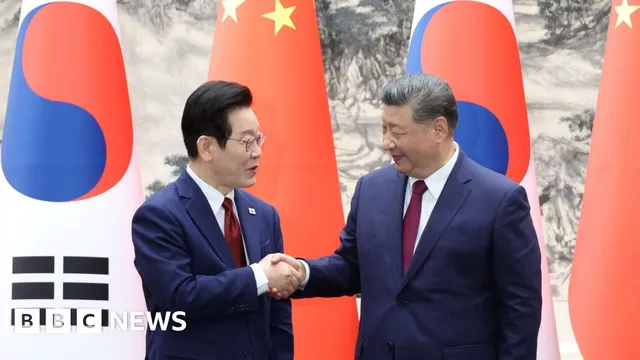
Xi Jinping hosts Lee Jae Myung to strengthen China-South Korea ties amid Japan tensions
Xi Jinping hosts Lee Jae Myung to strengthen China-South Korea ties amid Japan tensions
- Chinese President Xi Jinping will host South Korean President Lee Jae Myung starting January 4, signaling a desire to strengthen bilateral relations.
- This state visit comes amid rising tensions between Japan and both South Korea and China, with Lee seeking to maintain a balanced approach.
- Analysts see this meeting as a strategic effort to bolster ties and prepare for future discussions regarding regional diplomacy.
Story
South Korea is seeking to restore its relations with China following a period of tension under the previous administration. On January 4, 2026, Chinese President Xi Jinping will welcome South Korean President Lee Jae Myung for a state visit, marking their second meeting in two months. This visit is part of China's strategy to reinforce ties with Seoul, particularly as Japan faces strained relations with China over its diplomatic stance regarding Taiwan. Analysts suggest Lee's visit is timed to occur before he meets with Japanese officials, further emphasizing South Korea's delicate position in navigating its relationships with both China and Japan. The Lee administration aims to balance its diplomatic relationships and is focusing on cooperation with China to ensure economic stability. Acknowledging China's significance as South Korea's largest trading partner, Lee has reported intentions to persuade China to engage in dialogue with North Korea, an area of concern for both nations. The upcoming state visit is anticipated to discuss various critical issues, including technology partnerships, supply chain stability, and the essential rare earth minerals crucial to semiconductor manufacturing that South Korea imports heavily from China. Despite easing relations anticipated under Lee Jae Myung, Korea faces challenges from North Korea's unpredictability and the broader context of U.S. military presence associated with regional stability. General Xavier Brunson from US Forces Korea has pointed out that Korea must navigate increasingly complex dynamics not just on the peninsula, but also across Northeast Asia, making the balanced approach vital for South Korea's diplomatic strategy amidst potential threats. Conversely, in Japan, Prime Minister Sanae Takaichi's administration signals concerns about its diplomatic trajectory, especially following her hawkish stance toward China. Takaichi's leadership, drawing criticism from some quarters, reflects a lack of moderate voices in her circle. The former major political alliance with the Komeito party, which favored dialogue with China, has dissolved, potentially limiting Japan's flexibility in navigating diplomatic tensions. This internal Japanese political dynamic may further complicate trilateral relations among Japan, South Korea, and China, illustrating the considerable diplomatic challenges that lie ahead for all parties involved.


