

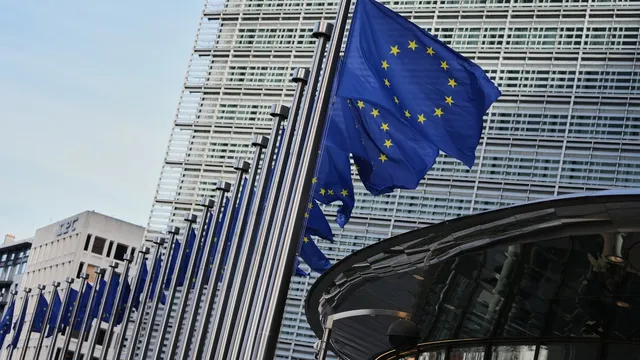
Nicolas Schmit condemns Ursula von der Leyen’s centralized EU leadership
Nicolas Schmit condemns Ursula von der Leyen’s centralized EU leadership
- Nicolas Schmit expressed dissatisfaction with the centralization of power in the European Commission under Ursula von der Leyen.
- He claimed that the lack of strategic debate and silence among the commissioners undermines the EU's influence on the global stage.
- Schmit's comments reflect a growing concern among former officials about the effectiveness of von der Leyen’s leadership.
Story
In early 2024, Nicolas Schmit, a former European Commissioner representing Luxembourg, publicly criticized the leadership of Ursula von der Leyen, the President of the European Commission. During an interview published by Politico, Schmit expressed his concerns regarding the centralized nature of the Commission under von der Leyen's rule, asserting that this governance style has led to the silencing of other commissioners and a lack of strategic vision for the European Union in a rapidly changing world. Schmit noted that the leadership failed to initiate significant discussions about Europe’s role globally, especially in confronting major international issues, particularly the United States under the Trump administration. Schmit's comments followed his exit from the Commission in 2024 after Luxembourg chose to nominate another candidate from von der Leyen's party instead of him for a second term. He elaborated on how the centralized decision-making structure has resulted in an inability to adequately address critical matters impacting Europe, leading to frustration among fellow commissioners. Schmit suggested that the current leadership is reluctant to engage with the United States on pressing issues, which may undermine the EU’s influence in global discussions, especially given the political pressures from figures like Donald Trump. The allegations against von der Leyen have been echoed by others, including former Commissioner Thierry Breton, who described her as being portrayed as “the Empress of Europe.” This portrayal stems from her perceived consolidation of power, which many believe is unsuitable for the collaborative ethos upon which the EU was built. Critics of von der Leyen’s administration have emphasized that transparency and open dialogue are essential for a functional and dynamic European Commission. The state of EU leadership dynamics was also reflected in von der Leyen’s ongoing confrontations with her critics, including accusations directed at opposition members of the European Parliament, which she labeled as Russian agents. Despite the controversies, von der Leyen has maintained her position and continued advocating for a confrontational approach towards Moscow, positioning herself as a strong leader in European politics. As a candidate in the competitive European elections through the Party of European Socialists, Schmit's position and insights illustrate the broader dissatisfaction with the current EU leadership style, which many perceive as overly top-down and undemocratic.
Context
The impact of centralized leadership in the European Union (EU) is a subject of significant importance, especially in the context of governance, policy implementation, and the overall functioning of the Union. Centralized leadership refers to a model where decision-making authority is concentrated in a central governing body, which in the EU's case is often embodied by the European Commission and the European Council. This approach to leadership has both advantages and disadvantages, influencing various aspects of EU governance, including efficiency, representation, and accountability. The centralized structure allows for swift decision-making in response to crises, providing a unified direction in policies concerning trade, environmental regulation, and foreign affairs. This has been particularly evident during events such as the COVID-19 pandemic, where centralized decisions regarding health protocols and vaccination strategies accelerated coordination among member states. However, the centralized leadership model can also lead to tensions regarding national sovereignty and representation. Some EU member states feel that their unique interests and needs are overshadowed by the dominant policies shaped by larger or more influential nations within the Union. This tension can result in discontent among smaller states, leading to calls for a more decentralized approach that would allow for greater regional autonomy and tailored policy solutions. Furthermore, the perception of a democratic deficit arises when citizens feel their voices are not adequately represented in the governance process, exacerbating trends of Euroscepticism in various member states. The balance between efficiency and representativeness remains a critical challenge, as the EU seeks to navigate the complexities of unified action versus individual state interests. In addition, centralized leadership has implications for policy implementation across diverse political landscapes. Policy initiatives may be easily conceived at the center but struggle during the application phase at national or local levels, primarily due to varying levels of political will, public opinion, and administrative capacity in different member states. The ability of the EU to function cohesively hinges on how effectively these policies can be adapted to local contexts while maintaining the integrity of the Union's broader objectives. Furthermore, the implications of centralized decision-making become particularly pronounced in crises requiring rapid responses, such as climate change or economic instability, where the agility of a centralized approach can lead to significant advancements but may also encounter pushback from those advocating for more localized control. To sum up, the impact of centralized leadership in the EU is multifaceted, presenting both opportunities for efficient governance and challenges regarding representation and local adaptability. As the EU continues to evolve, the ongoing dialogue about the nature and extent of centralized versus decentralized governance will be critical. Striking a balance that promotes unity while respecting the diversity of member states is essential for the future stability and success of the European Union. The ongoing reflection on these dynamics will not only shape the current policies but also influence the direction of the Union's institutional structures and democratic legitimacy going forward.


