

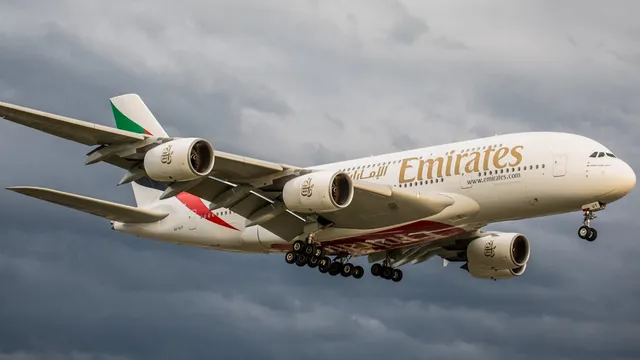
Emirates flight cancelled after fuel truck hits aircraft at Manchester Airport
Emirates flight cancelled after fuel truck hits aircraft at Manchester Airport
- An Airbus A380 was struck by a fuel truck while parked at Manchester Airport.
- The incident led to the cancellation of flight EK18 to Dubai, affecting multiple passengers.
- Emirates apologized for the inconvenience and ensured the aircraft was returned to service after maintenance.
Story
In the United Kingdom, an Emirates aircraft was recently involved in an incident at Manchester Airport. The Airbus A380, which had just arrived from Dubai after a seven-hour flight, was grounded after a collision with a fuel truck that occurred while the plane was parked at the gate and preparing for its return journey. The incident resulted in damage to one of the aircraft's engine covers. The flight, EK18, was consequently cancelled, causing inconvenience for the passengers who had to be rebooked onto the next available flights. \n\nThis incident is part of a troubling trend at airports, as it marks yet another instance this year of a stationary aircraft being struck by ground vehicles. Passengers impacted by this situation were provided assistance by Emirates, who quickly worked to accommodate their travel needs following the unexpected cancellation. An Emirates spokesperson confirmed that the aircraft was appropriately inspected before being cleared to return to service after more than two days of maintenance checks. \n\nThe airline reiterated its commitment to passenger safety and expressed regret over the disruption caused. The affected flight from Manchester was supposed to depart for Dubai International Airport on 28 November 2025, and it wasn't until 30 November that the aircraft was cleared to take off again. Such occurrences emphasize the importance of stringent safety protocols for ground operations at airports to prevent future incidents that could affect flight schedules and passenger travel experiences. \n\nWhile the incident at Manchester Airport has drawn attention, it is not an isolated case. An easyJet aircraft faced a similar situation earlier this year when it was struck by a maintenance vehicle at Paris Orly Airport, highlighting the need for improved safety measures and awareness in handling ground vehicles near parked aircraft. Both Emirates and other airlines must learn from these incidents to enhance safety standards for their operations to avoid further accidents.
Context
Safety protocols for ground vehicles at airports are crucial to ensure the safety of passengers, employees, and aircraft. Ground vehicles include a wide range of transportation options, from baggage and cargo trucks to shuttle buses and service vehicles. Due to the high-density environment of an airport, the risk of accidents and incidents involving ground vehicles can be significant. Therefore, establishing comprehensive safety guidelines is vital to mitigate risks and ensure the smooth operation of airport activities. Key areas of focus include vehicle operation training, traffic management, maintenance protocols, and communication systems. Effective training programs for ground vehicle operators are the foundation of safety at airports. Operators must be well-versed in the specific safety protocols associated with vehicle operation in an airport environment. This includes understanding the layout of the airport, recognizing hazardous areas, and adhering to speed limits. Operators should also be trained to communicate effectively with air traffic control and other ground personnel to avoid collisions and ensure a coordinated movement of vehicles. Additionally, ongoing training and refresher courses can help maintain high safety standards. Traffic management strategies play a significant role in enhancing safety protocols. Airports should implement clear signage, road markings, and designated lanes for different types of vehicles to minimize confusion and potential conflicts. The use of technology, such as radar systems and traffic cameras, can assist in monitoring ground vehicle movements and identifying unsafe practices. Moreover, airports can utilize an integrated approach to coordinate the movements of all vehicles, minimizing congestion and streamlining operations. Regular maintenance of ground vehicles is essential to ensure that they operate safely and effectively. This includes routine inspections, servicing of mechanical components, and prompt repairs of any identified issues. Furthermore, airports should establish a reporting system for any accidents or near misses, allowing for the identification of trends and implementation of corrective actions. Finally, a robust communication system is vital to inform all personnel of potential hazards, changes in protocols, or emergency situations, thereby enhancing overall safety at the airport.


