

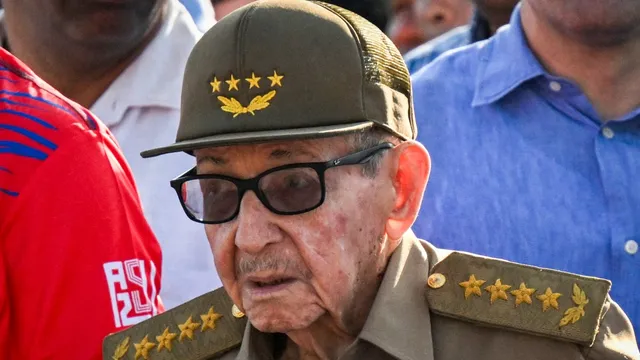
Justice Department seeks indictment of Raúl Castro over 1996 plane shootdown
Justice Department seeks indictment of Raúl Castro over 1996 plane shootdown
- The Justice Department is reportedly preparing to indict Raúl Castro for the 1996 downing of two civilian planes operated by Brothers to the Rescue, which left four Cuban Americans dead.
- The case has drawn increased attention as part of a broader effort by the Trump administration to intensify pressure on Cuba's government amid ongoing social unrest on the island.
- The potential indictment highlights the complex and strained relationship between the United States and Cuba, raising questions about the implications for future U.S. foreign policy.
Story
In the United States, the Justice Department is reportedly preparing to indict Raúl Castro, the former president of Cuba, over the shooting down of two civilian planes that occurred on February 24, 1996. These planes were operated by the humanitarian group Brothers to the Rescue, which surveyed the Florida Straits for Cuban refugees. The incident resulted in the deaths of four Cuban Americans, triggering a wave of political outrage and shaping subsequent U.S.-Cuba relations. During the period around the downing of the planes, tensions between Cuba and the United States were heightened. The Cuban government, led by Fidel Castro, justified the action by claiming that the planes had violated its airspace and posed a terrorist threat to national security. However, a U.S. Congressional examination later determined that the planes were unarmed and posed no serious threat to the Cuban military or government. The potential indictment is unfolding against a backdrop of increasing pressure from the Trump administration on the Cuban government, which has faced multiple sanctions, including an oil blockade. Reports suggest that the investigation into Raúl Castro is part of a broader multi-agency effort led by the U.S. Attorney's Office for the Southern District of Florida to hold members of the Cuban regime accountable for their actions. As President Donald Trump expressed frustration with the Cuban government's persistence in power, it appears that U.S. authorities are considering legal actions to exert further influence. Despite the substantial historical context, the case is moving forward amid protests that have erupted within Cuba due to worsening conditions exacerbated by U.S. sanctions, which have impacted supplies and led to fuel shortages. The current political situation is fragile, and experts express concern that destabilizing the island further could lead to a mass migration crisis as Cubans seek refuge elsewhere. As preparations for a potential indictment of Raúl Castro progress, the U.S. may be sending a decisive signal aimed at prompting change within the Cuban government, but the implications of such legal proceedings remain uncertain.
Context
The relationship between Cuba and the United States has been complex and fraught with tension for over a century. Initially, following the Spanish-American War in 1898, the U.S. emerged as an influential power in Cuba, leading to a period of U.S. occupation and the establishment of the Platt Amendment, which granted the United States extensive rights in Cuban affairs. This intervention laid the groundwork for a dominance that would shape Cuba's political landscape and foster resentment among its citizens. The early 20th century saw a back-and-forth dynamic of intervention, with U.S. corporate interests controlling significant portions of the Cuban economy, leading to frequent societal unrest and economic disparities. The rise of Fidel Castro in the 1959 Cuban Revolution marked a significant turning point, as the new government sought to distance itself from U.S. influence and align with Soviet communism, escalating hostilities between the two nations. The U.S.-Cuba relationship deteriorated rapidly post-revolution, most notably with the Bay of Pigs invasion in 1961, an unsuccessful attempt by U.S. forces to overthrow Castro, and the subsequent Cuban Missile Crisis in 1962, bringing the nations to the brink of nuclear confrontation. During this period, the U.S. imposed a trade embargo on Cuba, which has lasted for decades and has had profound effects on the Cuban economy and its people. The embargo was intended to pressure the Cuban government into democratization and the promotion of human rights but instead entrenched nationalistic sentiments and further isolated the island nation. Throughout the years, various diplomatic efforts were made to bridge differences, yet most attempts failed to yield tangible results, often hindered by internal politics in both countries. In the years approaching the 21st century, attitudes began to shift, particularly with the election of President Barack Obama, who pursued a policy of engagement rather than isolation. His administration sought to normalize relations, culminating in a historic visit to Cuba in 2016, where Obama and Raúl Castro discussed potential pathways toward bilateral cooperation. This period represented a hopeful era for advocates of diplomatic relations, as both nations took steps to reestablish diplomatic ties, reopen embassies, and facilitate greater travel and commerce. However, the subsequent election of Donald Trump in 2016 saw a rollback of many of these policies, reinstating restrictions on trade and travel, which were justified by concerns over human rights violations and the influence of the Cuban military in the economy. As of May 2026, the relationship remains tenuous, with ongoing discussions about the future of the embargo and potential reparative measures. Cuba continues to grapple with its economic challenges, exacerbated by the combined effects of the U.S. embargo and a shift towards less tourism and remittances during the COVID-19 pandemic. Recently, there have been renewed calls within the U.S. Congress for a reassessment of the embargo, especially in light of humanitarian interests and Cuba's role in regional stability. Moving forward, the historical context of U.S.-Cuba relations is crucial in understanding the trajectories of both nations, where mutual interests may yet forge a new chapter in their complicated history.


