

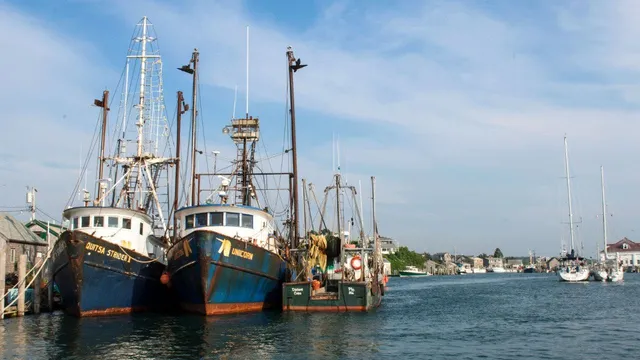
Trump reopens protected marine area to commercial fishing
Trump reopens protected marine area to commercial fishing
- In January 2026, President Donald Trump announced the reopening of a protected marine area to commercial fishing.
- Conservation groups voiced strong opposition, arguing the move threatens vulnerable species in the region.
- The decision reflects ongoing tensions between economic interests and environmental protection.
Story
In January 2026, President Donald Trump signed an executive order to reopen the Northeast Canyons and Seamounts Marine National Monument to commercial fishing. This area, situated off the New England coast and established by former President Barack Obama in 2016, had been protected due to concerns about overfishing and climate change. The proclamation claims that the species in the monument are already safeguarded under existing regulations, thus the prohibition on fishing was deemed unnecessary. Trump's support for this move has been linked primarily to the interests of Maine fishermen, who have long advocated for access to these waters. Trump's action comes in the context of a broader rollback of conservation measures that started during his administration, with the intention of easing regulatory burdens on commercial fishermen. He has frequently criticized the marine monument, arguing that his measures would not jeopardize the ecological interests that prompted its establishment. While commercial fishing groups welcomed the reopening, claiming it restores fairness to local fisheries, environmental organizations strongly opposed it and threatened legal action. They argue that removing protections endangers a diverse array of marine species and undermines the conservation goals initiated by previous administrations. The Northeast Canyons and Seamounts Marine National Monument is a significant area for biodiversity, supporting a wide range of marine life, including endangered species such as fin and sperm whales. Conservationists, including representatives from the New England Aquarium, have stressed the importance of this monument for the protection of these species, illustrating the ongoing clash between environmental conservation and commercial fishing interests. Additionally, Trump's proclamation follows a pattern of oscillating policies, reflecting the differing priorities of Republican and Democratic administrations regarding environmental regulations. As debates continue regarding the effectiveness and necessity of such marine protections, the ramifications of Trump's decision are expected to spark further discussions about sustainable fishing practices and the environmental health of the Atlantic Ocean. The decision may also influence future policies under subsequent administrations, reflecting the contentious nature of U.S. environmental policy and its impact on both the economy and marine conservation.
Context
Commercial fishing regulations in the USA play a critical role in maintaining sustainable fish populations and ensuring the health of marine ecosystems. These regulations are formulated and enforced primarily at both federal and state levels, guided by various laws and acts aimed at promoting responsible fishing practices. The Magnuson-Stevens Fishery Conservation and Management Act, enacted in 1976, is a foundational statute that governs marine resource management in the US, emphasizing sustainable yield and conservation of fish stocks. Under this act, the Secretary of Commerce has the authority to establish regulations, along with regional fishery management councils that develop fishery management plans (FMPs) for each species or group of species in U.S. waters. These FMPs dictate guidelines for catch limits, seasonal closures, area restrictions, and gear types that can be used, ensuring that fish populations are not overexploited and can reproduce effectively. In addition to the Magnuson-Stevens Act, various other regulations are established through agencies such as the National Oceanic and Atmospheric Administration (NOAA) and the U.S. Fish and Wildlife Service (USFWS). The total allowable catch (TAC) limits are set for target species based on scientific assessments, taking into account both ecological sustainability and the needs of fishing communities. Enforcement of these regulations is conducted through a network of fisheries officers who monitor compliance, conduct inspections, and carry out investigations to deter illegal fishing practices, such as overfishing and using prohibited gear. Non-compliance can result in significant penalties, including fines, loss of fishing licenses, and, in severe cases, criminal charges. State regulations also complement federal guidelines, often introducing additional measures such as licenses, permits, and size and bag limits for various species to cater to local conditions and fish stocks. This dual regulatory framework allows for better management responding to regional characteristics of fisheries and the socio-economic contexts of fishing communities. Specific states may have unique management measures that address local fish populations or environmental challenges, thus providing tailored solutions to regional issues. As fishing technology advances, the challenges of enforcing these regulations become increasingly complex. Issues such as bycatch (the capture of unintended species), habitat destruction, and the impact of climate change on fish migrations necessitate ongoing adaptation of fishing regulations. Stakeholder engagement, including input from fishermen, conservationists, and scientists, remains essential to developing effective regulatory measures that balance economic interests and conservation goals. Through collaborative efforts, the fishing sector's sustainability can be enhanced, ensuring that future generations can enjoy healthy, abundant marine resources.


