

Trump slams AOC for poor Taiwan defense response at Munich event
Trump slams AOC for poor Taiwan defense response at Munich event
- During the Munich Security Conference in February 2026, Alexandria Ocasio-Cortez struggled to articulate U.S. military support for Taiwan.
- Former President Donald Trump criticized her performance, calling it embarrassing and suggesting she should better represent American interests.
- Ocasio-Cortez defended her understanding of foreign policy, despite criticisms, as she appears to navigate the complexities of her political aspirations.
Story
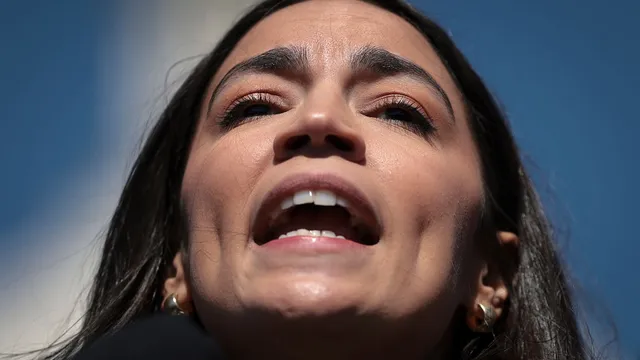
In February 2026, at the Munich Security Conference, Alexandria Ocasio-Cortez, a progressive Democrat from New York, faced significant criticism for her responses on U.S. military support for Taiwan in the event of Chinese aggression. During the conference, Ocasio-Cortez's answers were described as 'sputtering' and 'embarrassing', particularly her inability to directly address a question about deploying U.S. troops to defend Taiwan. She attempted to emphasize diplomatic strategies to avoid confrontation, focusing on the long-standing policy of the United States regarding Taiwan but struggled to articulate her thoughts clearly, leading to complaints about her effectiveness on the international stage. Following the event, former President Donald Trump was vocal in his criticism of Ocasio-Cortez, labeling her performance as 'horrible' and suggesting that she should be better prepared to represent American interests abroad. He stated that her lack of a decisive answer during a critical diplomatic discussion was an embarrassment for the country, reinforcing the narrative that progressive Democrats may not be well-equipped for high-stakes foreign policy issues. Trump's remarks were part of a broader critique against the Democratic Party, associating their policies with economic concerns and suggesting that inflation was exacerbated by their governance. In light of the criticisms, Ocasio-Cortez took to social media to address her detractors, standing firm in her understanding of foreign policy despite evident challenges during the panel discussion. She dismissed the critics, including those who remarked on her knowledge of the subject, emphasizing her commitment to economic and social issues and the need to address inequality as fueling political extremism. The Munich appearance was also framed as an effort to raise awareness about the dangers of inequality and populism, which she warned could threaten democratic norms if not addressed. Despite the backlash, Ocasio-Cortez's clear stances on other topics, such as her criticism of unconditional aid to Israel, showcased her ability to articulate complex issues when unencumbered by immediate pressure, highlighting that while she faced setbacks in Munich, she still commands significant recognition and popularity among progressive circles. Ocasio-Cortez, who has not officially declared an intention to run for president, remains a noteworthy figure in Democratic politics with ambitions for national leadership, underscoring the tensions within the party between progressive and centrist factions.
Context
The Munich Security Conference (MSC) held in February 2026 attracted global attention due to its focus on pressing international security issues. Among the prominent figures participating was U.S. Congresswoman Alexandria Ocasio-Cortez, who emphasized the need for collaborative approaches to global security challenges. Ocasio-Cortez's remarks resonated with a growing consensus among policymakers that traditional security paradigms must adapt to include non-traditional threats such as climate change, economic disparity, and public health crises. This conference served as a platform for not only discussing military and defense strategies but also addressing the interconnected nature of modern security concerns. Ocasio-Cortez highlighted the importance of integrating climate resilience into security planning, arguing that climate change serves as a "threat multiplier" that exacerbates existing conflicts and jeopardizes international stability. Her contributions sparked conversations about the necessity of rethinking foreign policy approaches that have historically favored military solutions over diplomacy and cooperation. Emphasizing the role of youth engagement, she called for a new generation of leaders who can approach diplomacy with a fresh perspective on inclusivity and collaboration. In addition to Ocasio-Cortez's address, the conference featured experts from various sectors, including technology and humanitarian aids, who discussed innovations in security. The importance of cyber resilience and the protection of critical infrastructure were key topics, especially as nations grapple with the reality of cyber warfare and espionage. Participants engaged in workshops designed to explore the integration of technological advancements into defense strategies while maintaining ethical considerations and safeguarding civil liberties. Overall, the 2026 Munich Security Conference underscored the urgency of addressing security through a multi-faceted lens, and Ocasio-Cortez's participation highlighted the necessity for political leaders to engage with emerging global challenges comprehensively. Her insistence on sustainable security approaches garnered significant attention and support, shaping the discourse for future international security engagements. The takeaways from this conference signal a pivotal shift towards an inclusive, well-rounded approach that transcends traditional military focus, advocating for a global community united in response to complex and interrelated threats.


