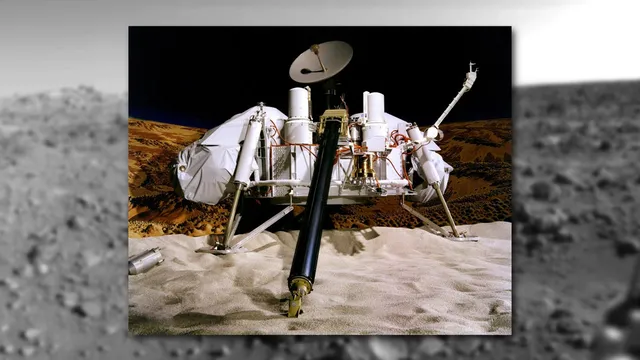
In the ongoing exploration of Mars, scientists have been investigating the planet's potential for past and present life. Since 2012, NASA's Curiosity rover has been examining Gale Crater for signs of ancient habitable environments. The findings suggest that Mars was once a more life-friendly world approximately 3.5 billion years ago. Experts like Chris McKay from NASA's Ames Research Center argue that the evidence for habitable environments and life on early Mars is becoming increasingly compelling, even if definitive proof remains elusive. The search for life on Mars has been cautious, with scientists wary of making bold claims without substantial evidence.
The Curiosity rover's discoveries have led to a growing belief among astrobiologists that ancient Mars may have supported life. However, the scientific community is divided on how to interpret the findings. Some researchers caution against jumping to conclusions, emphasizing the need for rigorous evidence before claiming the existence of extraterrestrial life. The debate continues as scientists grapple with the implications of their findings and the potential for future discoveries.
The Mars Sample Return mission is anticipated to provide more concrete evidence regarding the planet's habitability. Until then, astrobiologists are left to analyze the data collected by rovers like Curiosity and Perseverance, which have detected organic compounds at their landing sites. These findings raise questions about the nature of life on Mars and whether it could have existed in the past.
As the search for life on Mars progresses, the scientific community remains cautious yet hopeful. The potential for discovering life beyond Earth has profound implications for our understanding of biology and the universe. The ongoing research aims to build a quantitative framework for identifying biosignatures, which could help distinguish between biological and non-biological processes. The quest for answers continues as scientists strive to unlock the mysteries of Mars and its potential to harbor life.