

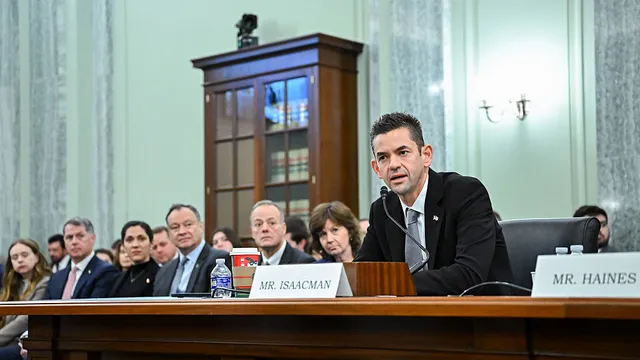
Jared Isaacman confirmed as new NASA administrator after prolonged saga
Jared Isaacman confirmed as new NASA administrator after prolonged saga
- The Senate confirmed Jared Isaacman as NASA administrator after a tumultuous nomination process.
- Isaacman, a billionaire entrepreneur without prior government experience, faces significant challenges in NASA's budget and priorities.
- His confirmation marks a turning point for NASA as it aims to compete with other nations in space exploration.
Story
In Washington, the Senate confirmed Jared Isaacman as the new administrator of NASA, concluding a lengthy nomination process that began over a year ago. Isaacman, 42, is a billionaire entrepreneur known for founding Shift4 Payments and has participated in SpaceX missions, which led to scrutiny regarding his ties to the company. His nomination, which was first put forth by President Donald Trump in December 2024, faced an abrupt withdrawal after five months due to an internal conflict related to Trump's feud with Elon Musk. Trump's re-nomination of Isaacman occurred in November after acknowledging his qualifications for NASA's leadership role. Once confirmed by a bipartisan vote of 67-30, Isaacman steps into a pivotal role at NASA, facing significant challenges including determining the agency's budget and priorities amid recent funding cuts. Although he previously served as the interim administrator, Sean Duffy will now pass the agency reins to Isaacman. The context for Isaacman’s leadership transition involves not only fiscal constraints imposed by the Trump administration but also the pressing need for NASA to compete with accelerated advancements in China's space endeavors. Isaacman’s public statements indicate a focus on lunar exploration and a commitment to adopting a business-centric approach in NASA's operations. His confirmation came amidst heated discussions regarding his proposed working document, Project Athena, which emphasizes Mars missions and commercial partnerships aimed at revitalizing NASA's science operations. Isaacman clarified that Project Athena was a draft but expressed confidence in its overall direction. This leadership change at NASA occurs at a critical moment as the agency seeks to regain momentum following a series of ambitious yet delayed initiatives, notably the Artemis program aimed at returning humans to the moon. Recognizing the geopolitical landscape of emerging space powers, Isaacman aims to elevate the United States’ position in the ongoing space race, particularly against China’s commitment to establish a long-term presence on the lunar surface by 2030.


