
politics
impactful
controversial

Marco Rubio shapes U.S. foreign policy amid military actions in Venezuela

Jan 27, 2026, 4:33 PM112
(Update: Jan 29, 2026, 1:30 AM)
president of the United States from 2017 to 2021
American politician (born 1971)

Marco Rubio shapes U.S. foreign policy amid military actions in Venezuela

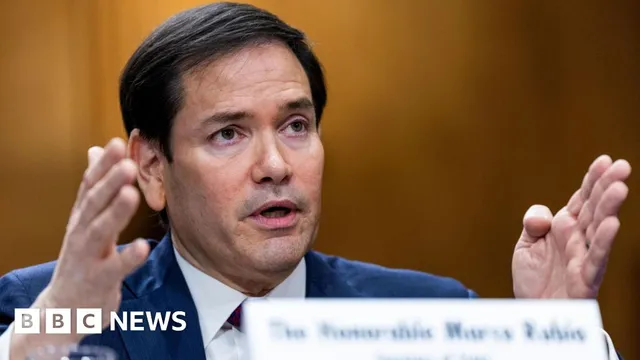
  • Secretary of State Marco Rubio delivered testimony on the Trump administration's actions regarding Venezuela and reassured that current military operations are not an act of war.
  • In response to criticism from Democrats, he emphasized cooperation from Venezuelan interim leaders and a strategy focused on U.S. economic interests in the region.
  • Rubio's influence in shaping U.S. foreign policy highlights a significant shift in the administration's approach to diplomacy and military intervention.
Share your opinion
11

Story

In early January 2025, following a military operation against Nicolás Maduro's regime, Secretary of State Marco Rubio articulated the Trump administration's policy regarding Venezuela during a Senate testimony. The U.S. captured Maduro and emphasized no current military presence or intention for future conflict, despite earlier negotiations suggesting a readiness to respond with force if necessary. Rubio argued that interim President Delcy Rodríguez's cooperation aligns with U.S. objectives, including access to Venezuela's energy sector and economic reforms beneficial to American businesses. This marked a significant shift in U.S. foreign policy, indicating a willingness to prioritize American interests while navigating the complexities of international relations in a national security context. Rubio, a former senator from Florida and son of Cuban immigrants, has played an instrumental role in crafting Trump's foreign policy, particularly concerning Latin America. His testimony highlighted a strategic pivot toward asserting U.S. dominance in the region while garnering support from Republican senators for the administration's military actions in Venezuela. The Trump administration faces criticism from Democrats, who argue that emerging authoritarianism resembles previous interventionist policies in Latin America. Rubio's position indicates a balance between maintaining U.S. national security interests and navigating potential backlash from Congress and the international community. As the only individual since Henry Kissinger to manage the National Security Council alongside the State Department, Rubio represents a central figure in Trump's approach to foreign diplomacy. Trump's characterization of Rubio's guidance as critical in developing his diplomatic skills suggests an expanding influence of the Secretary of State over executive decisions. This relationship is further demonstrated by Trump's announcement of U.S. intentions to oversee Venezuela's transition toward democracy, hinting at a long-term strategy that aligns with American economic interests. With an eye on stabilizing both the region and U.S. foreign relations, the administration seeks to navigate the delicate balance between enforcement and diplomacy. In response to ongoing criticism and concerns about the legality of military actions without Congressional approval, Rubio made assurances that the administration would involve Congress in future military considerations. This highlights the ongoing contention between the executive branch and legislative oversight regarding interventions overseas. Overall, Rubio's role exemplifies a new era in U.S. foreign policy under Trump, where assertiveness in military action doubles down on economic leverage, redefining the nation's historic stance in Latin America while setting the stage for future diplomatic challenges and opportunities.

2026 All rights reserved
