

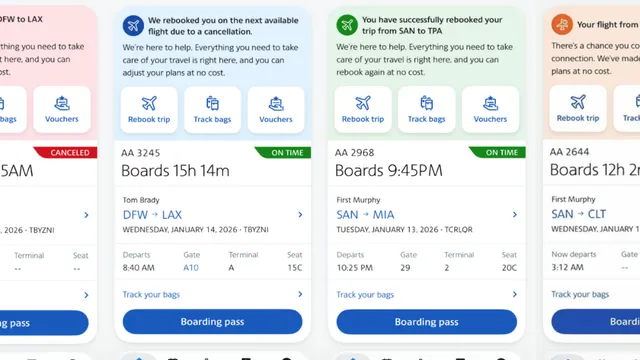
Airlines revolutionize travel with app upgrades for smarter journeys
Airlines revolutionize travel with app upgrades for smarter journeys
- United and American Airlines have recently upgraded their mobile apps, introducing features to improve passenger connectivity.
- The updates include real-time updates, bag tracking, and tools to ease booking and rebooking processes.
- These app enhancements reflect the airlines' commitment to modernizing their services to meet customer expectations.
Story
In recent weeks, United Airlines and American Airlines have introduced significant updates to their mobile applications to better support travelers. These app upgrades include various new features aimed at minimizing travel burdens and enhancing passenger convenience during the air travel experience. United Airlines, for instance, has focused on real-time updates and personalized assistance through its app, allowing customers to feel as though they have an assistant guiding them throughout their journey. Features like Virtual Gate, updated mobile bag tracking, and the ability to pre-order meals are designed to streamline the travel process. The airlines' investments highlight a growing trend in the aviation industry to utilize technology to improve customer service and operational efficiencies. American Airlines has also integrated similar features in its app, facilitating quicker resolutions for travel disruptions. Passengers can monitor their baggage in real-time, rebook flights without long waits, and access various travel-related services through their smartphones. Furthermore, a color-coded flight status system has been incorporated to help travelers quickly assess their flight situations, which can alleviate stress during delays or cancellations. By enhancing their applications, these airlines are responding to passengers' need for improved communication and service in an increasingly competitive market. The evolution of airline apps has been prompted by advancements in technology, particularly artificial intelligence, which enhances the functionality of these digital platforms. As a result, travelers can expect a more interactive experience, contributing to enhanced satisfaction and efficiency during air travel. Such app upgrades are not merely an afterthought; they represent a focused initiative by airlines to meet the changing demands of customers who are increasingly reliant on mobile technology. As both United and American Airlines roll out these features, the industry witnesses a transformation in how airlines engage with passengers. Airlines are clearly recognizing that an effective mobile application can serve as a critical touchpoint for customer engagement, allowing for seamless transactions and personalized services. Ultimately, these advancements reflect the airlines' commitment to adapting to the modern travel landscape and the expectations of 21st-century travelers who favor convenience and flexibility.
Context
global insight impact impact trends market insight shift global data geopolitical insight strategic economic geopolitical policy data analysis impact trends insight market insight analysis market policy geopolitical policy insight shift shift market strategic strategic insight policy global analysis policy data shift policy economic market market insight market economic global shift impact strategic insight geopolitical global insight data policy strategic geopolitical impact shift shift economic strategic analysis geopolitical data impact geopolitical strategic policy data economic insight economic shift economic insight data...


