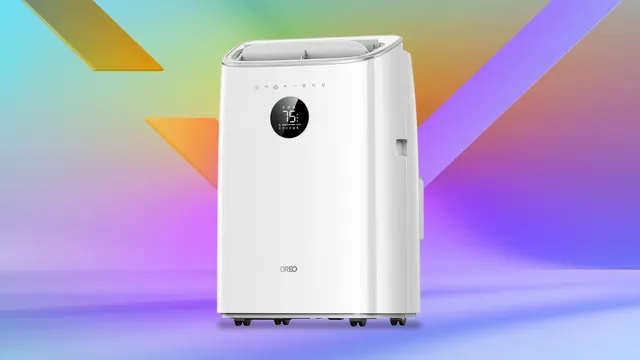
In the United States, portable air conditioners have become increasingly popular due to their convenience and flexibility. However, many consumers find the BTU ratings associated with these units confusing. Unlike traditional window air conditioners, portable models often display two different BTU ratings: one from the American Society of Heating, Refrigerating and Air-Conditioning Engineers (ASHRAE) and a lower one from the Department of Energy (DOE). This discrepancy arises because the higher ASHRAE rating does not accurately reflect the unit's real-world cooling performance, which can be significantly lower due to energy loss during operation.
In 2017, the Department of Energy implemented new testing procedures aimed at providing a more accurate measurement of cooling performance for portable air conditioners. This change was necessary because previous ratings often misled consumers about the actual efficiency of these units. Bryan Adams, a senior lab engineer at CNET, explained that the true BTU number for portable air conditioners is usually between 25% and 40% lower than the ASHRAE rating. This is primarily due to the design of portable units, which vent heat outside through a hose connected to a window, leading to energy loss as they recool air that has already been treated.
The introduction of the DOE rating was a significant step in correcting the HVAC regulatory bodies' classification of cooling efficiency, which had been a longstanding issue. Many older portable air conditioner models only featured the ASHRAE rating, which contributed to consumer confusion. The updated DOE rating aims to provide a clearer understanding of a unit's cooling capabilities, helping buyers make more informed decisions when purchasing portable air conditioners.
When selecting a portable air conditioner, it is crucial for consumers to consider the appropriate BTU rating based on the size of the space they wish to cool. Factors such as room size, sun exposure, insulation, and ceiling height all play a role in determining the necessary cooling capacity. By understanding the differences between the two BTU ratings and the factors that influence cooling performance, consumers can choose the right portable air conditioner for their needs.