
military conflicts
informative
controversial

Travel chaos ensues for UK holidaymakers returning from Abu Dhabi

Mar 23, 2026, 7:26 PM10
(Update: Mar 23, 2026, 7:26 PM)
capital city of the United Arab Emirates
most populous city in the United Arab Emirates and the capital of the Emirate of Dubai
country in north-west Europe
Travel journalist

Travel chaos ensues for UK holidaymakers returning from Abu Dhabi

  • In March 2026, flights from Abu Dhabi and Dubai faced significant cancellations, despite high demand from UK holidaymakers.
  • Passengers experienced long delays and confusion, with some rebooked onto flights up to 11 days later.
  • The situation highlighted the risks of traveling to regions deemed unsafe by government advisories.
Share opinion
Tip: Add insight, not just a reaction
1

Story

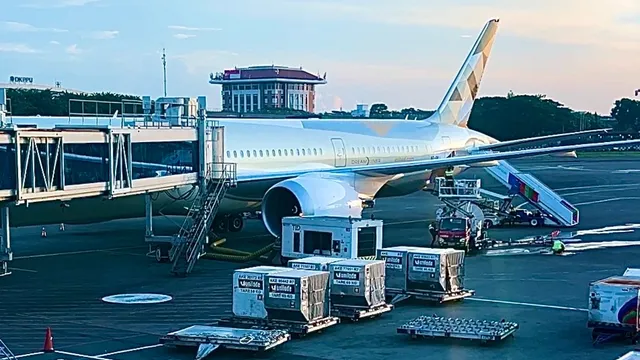
In March 2026, travelers in the United Arab Emirates faced significant disruption as flights to and from Abu Dhabi and Dubai were canceled, despite the Foreign Office's classification of these cities as off-limits. This situation arose during a period when numerous UK holidaymakers were set to return home. A notable case involved Simon Calder, who was scheduled to fly from Jakarta to Abu Dhabi with a planned stopover at an airport hotel. Travelers were initially excited, expecting smooth transit through Abu Dhabi’s airports, which typically have robust connectivity to Europe, especially the UK. However, the reality was far from it. As hundreds queued at the Etihad check-in area in Jakarta ahead of the 6 PM flight, tensions began to rise with growing uncertainty surrounding their travel plans. Although the usual flight frequency included two Etihad flights daily and multiple Emirates A380 SuperJumbo departures to Dubai, cancellations left many stranded. After a lengthy wait, passengers received notices about flight cancellations, leaving them frustrated and considering their next steps. The travel insurance and airline support systems were tested, as many worked tirelessly to communicate their concerns and rebook their flights. People's plans were significantly delayed, as some travelers were informed they would have to wait 11 days for the next available flight back to the UK. As part of around-the-clock efforts to monitor their next steps, many chose to head in early to the terminal to be prepared for any last-minute changes. In the case of Simon Calder, even while holding on to hopes for timely travel, they faced uncertainty when their next flight to Manchester also faced potential delays. More than a mere inconvenience, these travel complications were set against the backdrop of political tensions in the region, and the issues reflected deep-seated concerns regarding travel safety and reliability. Even as the further implications and reasons for these cancellations emerged, they highlighted an ongoing struggle between travel aspirations and geopolitical realities. The journey included navigation over closed airspace of surrounding nations such as Qatar, Bahrain, and Kuwait, which further added to the evolving narrative of travel uncertainty for passengers returning to the UK from the Middle East.

Context

The ongoing political tensions in various regions of the world have noticeably impacted flights operated by airlines in the United Arab Emirates (UAE). The UAE, known for its strategic geographical location as a global flight hub, has faced significant operational challenges as tensions escalate in surrounding areas. The influence of geopolitical issues has not only affected air traffic patterns but also airline profitability, as changes in consumer behavior lead to fluctuations in demand for flights. Consequently, the UAE's flagship carriers, including Emirates and Etihad, have had to adapt their routes and operational strategies to mitigate these challenges and maintain customer confidence. One of the most significant aspects of how political tensions affect UAE flights is the airspace restrictions imposed due to military conflicts in nearby regions. These restrictions can lead to longer flight paths, resulting in increased fuel costs and longer travel times. Moreover, airlines have taken precautions by avoiding specific airspaces, further complicating flight scheduling and resulting in delays. Furthermore, when tensions rise, airlines may experience lower passenger numbers as travelers opt for more stable routes or refrain from traveling altogether, leading to lower revenue for affected airlines. In response to these evolving dynamics, UAE airlines have sought to diversify their operations and strengthen routes to destinations outside conflict zones. This strategy not only allows them to sustain operations during turbulent geopolitical climates but also positions them to capture markets that may have previously relied on other regions for air travel. Additionally, the airlines have invested in enhancing their safety protocols and communication strategies to reassure customers about flight safety, especially in light of recent events that have raised safety concerns for air travel. The impact of political tensions on UAE flights underscores the need for airlines to remain agile and responsive to an ever-changing global landscape. The recovery from these disruptions will depend on the resolution of underlying geopolitical issues, as well as the ability of UAE airlines to innovate and maintain high standards of service while navigating potential crises. As such, the industry will be closely monitoring geopolitical developments and adjusting their strategies accordingly to ensure continued operational resilience in the face of uncertainty.

2026 All rights reserved
