
military conflicts
tragic
local

Eight dead and dozens injured in passenger bus crash in Turkey

Feb 1, 2026, 10:36 AM20
(Update: Feb 2, 2026, 10:43 AM)
transcontinental country straddling Western Asia and Southeastern Europe
province on the Mediterranean coast of south-west Turkey

Eight dead and dozens injured in passenger bus crash in Turkey

  • On February 1, 2026, a passenger bus rolled off a road in Antalya province, resulting in eight fatalities.
  • Provincial Governor Hulusi Sahin indicated that 26 individuals sustained injuries, with several in critical condition.
  • The incident raises concerns about traffic regulations and safety in Turkey, especially under adverse weather conditions.
Share your opinion
2

Story

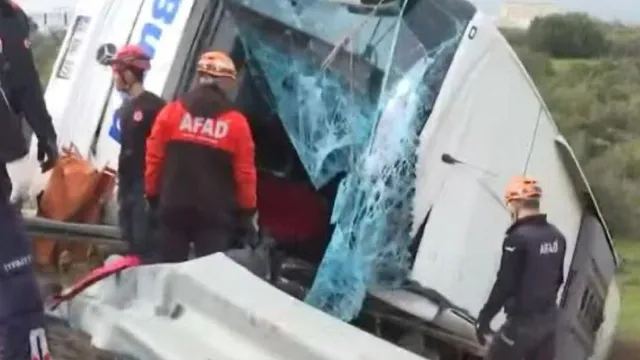
On February 1, 2026, a tragic accident took place in southern Turkey's Antalya province when an intercity passenger bus rolled off a road. The collision resulted in the death of eight individuals, including the driver. The bus, which originated from Tekirdag in Turkey's northwest, encountered adverse weather conditions, with heavy rainfall and fog reported in the area. Images broadcasted by the state media outlet TRT depicted the overturned bus precariously positioned on its side in an embankment along a highway slip road in the Dosemealti district, located northwest of Antalya city center. Provincial Governor Hulusi Sahin reported that a total of 26 individuals were injured during this incident, with several suffering from critical injuries, including seven with severe wounds such as severed limbs. Eyewitness accounts suggested that some passengers were thrown from the bus at the moment of the crash, indicating the suddenness and severity of the accident. The adverse weather, characterized by wet ground conditions and fog, raised concerns about the speed of the bus, as Sahin stated that the area was not suitable for high-speed travel. He suggested that the bus may have been speeding, emphasizing the need for caution while driving in such conditions. In addition to this calamity, on the same day, a separate traffic incident claimed the lives of seven individuals in Burdur, a city situated approximately 65 kilometers north of Dosemealti. These accidents sparked a discussion on Turkey's road safety, leading to comments from Interior Minister Ali Yerlikaya, who lamented the traffic culture in the country. In 2024 alone, 6,351 fatalities were reported on Turkish roads, highlighting a concerning trend regarding vehicular safety and road regulations. The severe weather conditions in the region coincided with numerous incidents affecting road safety, underlining the urgent need for reinforced traffic regulations and driver awareness campaigns. With increasing traffic fatalities, particularly in adverse weather, discussions are expected surrounding the enforcement of existing laws and potential reforms to improve overall road safety in Turkey. Such measures would aim to reduce the number of accidents, particularly during periods of poor weather when driving conditions can become perilous, ensuring the safety of both local citizens and travelers in popular tourist destinations like Antalya.

Context

The passenger bus accident statistics in Turkey reflect significant safety concerns and trends over recent years. With a population exceeding 82 million, Turkey has a well-established transport network that includes a high number of commercial buses facilitating both intercity and urban travel. However, with this extensive bus system comes an increase in the potential for accidents. Recent data indicates that bus-related accidents have shown fluctuations in numbers, with some years demonstrating a reduction in incidents while others reflect alarming increases. Various factors contribute to these trends, including infrastructure quality, driver training, and compliance with safety regulations. The Turkish government, alongside transport authorities, has made concerted efforts to improve road conditions and enforce stricter traffic laws, yet the data shows there is still work to be done. Recent statistical analyses reveal that while the total number of accidents involving buses has seen a downward trend in the last few years, fatal accidents remain a critical issue. Approximately 24 percent of all road fatalities in Turkey involve passenger buses, highlighting the need for focused interventions. The government has implemented various measures, such as stricter licensing for drivers and automatic braking systems for new buses, which are anticipated to enhance overall safety. Furthermore, public awareness campaigns educating passengers about their rights and safety practices during travel have been introduced, aiming to reduce risk and enhance accountability. When assessing the impact of geographic and demographic factors on bus accidents, it becomes evident that rural areas experience a higher rate of such incidents compared to urban regions. This disparity can be attributed to poorer road infrastructure and a lack of surveillance and enforcement mechanisms in less populated areas. Moreover, night-time travel has been associated with a higher incidence of accidents, suggesting that visibility and fatigue are significant contributors to the risks involved. In conclusion, the statistics surrounding passenger bus accidents in Turkey reveal a complex interplay between improved safety measures and persistent challenges. While advancements have been made toward reducing accident rates, particularly in urban centers, a comprehensive approach that includes enhancing road infrastructure, stringent enforcement of regulations, and improved driver training is essential. Continuous monitoring and evaluation of implemented strategies will be paramount to further decreasing the rate of such accidents and ultimately saving lives.

2026 All rights reserved
