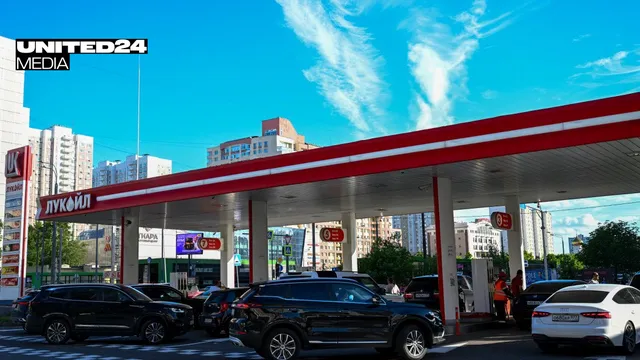
Russia is currently facing its most severe fuel shortages in years, with more than half of its 83 regions reporting significant gasoline shortages. This crisis has been largely attributed to a series of Ukrainian drone strikes targeting critical oil infrastructure, including refineries and pipelines. As a response to the escalating situation, local authorities in six regions—Omsk, Irkutsk, Saratov, Voronezh, Amur, and Tambov—have introduced strict limits on fuel sales to prevent panic buying and market speculation. These measures include capping gasoline purchases at 30-40 liters per vehicle, with additional restrictions on diesel fuel.
In the Omsk region, Governor Vitaly Khotsenko announced that fuel would only be dispensed directly into vehicle tanks, limiting gasoline purchases to 40 liters and diesel to 80 liters in cities and 200 liters on highways. The Saratov region has enforced a 30-liter gasoline limit for individuals from June 23 to June 30, while Lukoil stations in Voronezh are restricting sales to 30 liters of gasoline and 60 liters of diesel in urban areas, with higher limits on highways. In Irkutsk, some stations have halted sales entirely to prioritize emergency services and public transport.
The overarching goal of these restrictions is to stabilize local fuel supply and prevent artificial panic among consumers. Local officials maintain that despite the purchase caps, the supply chain remains intact, with federal gas station chains reportedly holding sufficient reserves of various fuel types. However, the situation remains precarious, as the ongoing conflict with Ukraine continues to disrupt fuel production and distribution.
As of June 24, at least 55 of Russia's federal entities are experiencing either mandatory restrictions on fuel sales or limitations imposed by private companies. The Kremlin is facing increasing pressure as public frustration grows over the fuel crisis, which is compounded by the ongoing war in Ukraine. The situation is further complicated by the fact that the largest fuel supplier to the Moscow region, the Kapotnya refinery, has been severely damaged and will remain offline until at least the end of 2026. The Russian oil industry is under significant strain, and the consequences of these shortages could have far-reaching implications for the country's economy and public sentiment.