

Ukraine faces wave of terror attacks against police amidst war anniversary
Ukraine faces wave of terror attacks against police amidst war anniversary
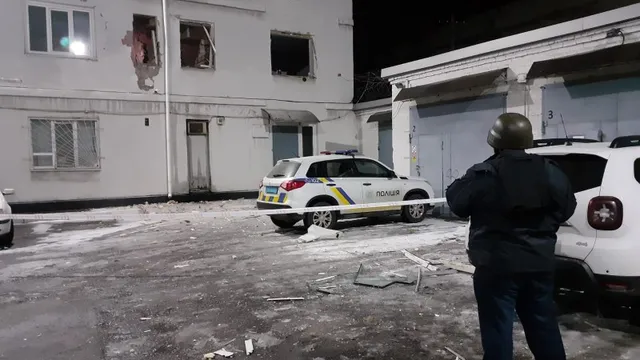
- An explosion hit a police station in Dnipro, Ukraine, on February 23, 2026, with no reported casualties.
- Earlier that day, another explosion occurred in Mykolaiv, injuring seven police officers.
- Authorities are investigating the incidents, identifying them as targeted attacks amidst a growing threat to law enforcement.
Story
In Ukraine, a series of explosions targeting law enforcement officials has raised concerns ahead of the four-year anniversary of Russia's full-scale invasion. On February 23, 2026, an explosion struck a police station in Dnipro's Amur-Nizhnyodniprovskyi district at approximately 8:30 PM. Fortunately, no casualties were reported from this incident. However, the blast caused significant damage, shattering windows and damaging furniture and equipment within the police building, as well as affecting a parked car nearby. An investigation into the explosion's details continues as authorities seek to understand the factors leading to this attack. Earlier that same day, another explosion occurred in Mykolaiv, a southern city, which resulted in injuries to seven police officers, two of whom were critically wounded. The string of attacks targeting police officers is neither an isolated incident nor a coincidence, according to National Police chief Ivan Vyhivskyi, who characterized these incidents as a deliberate attempt by adversaries to destabilize the law enforcement framework in Ukraine. This dangerous pattern was further illustrated by tragic events in Lviv the preceding day, where two blasts resulted in the death of a 23-year-old police officer and injured 25 others. Authorities, including President Volodymyr Zelensky, have condemned these attacks, asserting that there is a coordinated campaign aimed at undermining law and order within the nation. Zelensky attributed the motivations behind the recent uptick in violence to Russian influences. Despite the chaos and fear instilled by these bombings, they highlight the ongoing challenges Ukrainian law enforcement faces amid a broader conflict. Further, the Security Service of Ukraine (SBU) noted that some attacks targeted recruitment centers, and acknowledged that certain incidents involved individuals unaware of the gravity of their actions. Reports from early February indicated that perpetrators were compensated for planting improvised explosive devices (IEDs), which were then triggered remotely by their handlers. These troubling dynamics showcase a troubling trend of internal threat alongside external aggression, raising critical questions about strategies to ensure public safety and protect law enforcement officers in Ukraine.
Context
The ongoing conflict resulting from Russian aggression in Ukraine has had profound implications for Ukrainian law enforcement agencies. This situation has tested the resilience and adaptability of these institutions, which have faced not only a surge in crime but also challenges relating to national security and public trust. As Russian forces and proxy entities have destabilized large parts of Ukraine, law enforcement agencies have had to recalibrate their strategies in response to rapidly changing security dynamics, focusing on counter-terrorism, public order maintenance, and community resilience. The heightened security environment has necessitated increased collaboration among various law enforcement bodies, military, and intelligence services, which has fostered a model of inter-agency cooperation previously uncommon in peacetime operations. In addition to operational challenges, the impact of the conflict has significantly affected the morale and public perception of Ukrainian law enforcement. Yearning for stability, Ukrainian citizens have looked to law enforcement for protection and reassurance. However, the increased military presence and aggressive measures taken to combat the conflict have sometimes resulted in civil liberties concerns. Consequently, law enforcement agencies are tasked with striking a balance between ensuring public safety and upholding the rule of law while navigating the risk of political interference amidst the war. Training programs have been intensified to boost the skills of law enforcement personnel, focusing on civil rights and community engagement to foster a more positive relationship between the police and the communities they serve. The conflict has also led to unique challenges in resource allocation, as law enforcement agencies are often diverted from their traditional roles to address military-oriented tasks such as border security and critical infrastructure protection. The diversion of resources has sometimes left gaps in the ability to address domestic issues such as tackling corruption and resolving organized crime, both of which remain pressing issues within Ukraine. Nevertheless, international support and assistance have been integral in enhancing the capabilities of Ukrainian law enforcement, providing additional training, equipment, and intelligence resources to bolster domestic security efforts. By leveraging these resources effectively, Ukraine has been able to improve institutional capacity despite the challenges posed by ongoing aggression. Moreover, the advancements in law enforcement technology have significantly shifted the landscape of policing in Ukraine during this turbulent period. The incorporation of modern policing techniques, such as cybercrime units and advanced forensic capabilities, has provided agencies with necessary tools to combat emerging threats that have arisen due to the conflict. The adaptation to these technologies represents a critical step toward reforming the justice system in Ukraine and enhances its ability to respond to future challenges, ultimately contributing to the ongoing drive for European integration and alignment with global law enforcement standards.


