

China threatens Panama with heavy prices over port contract cancellation
China threatens Panama with heavy prices over port contract cancellation
- A Panama court annulled CK Hutchison's contract to operate two Canal ports due to constitutional violations.
- China responded by warning Panama of significant political and economic consequences.
- This ruling could jeopardize CK Hutchison's $23 billion deal and strain US-China relations.
Story
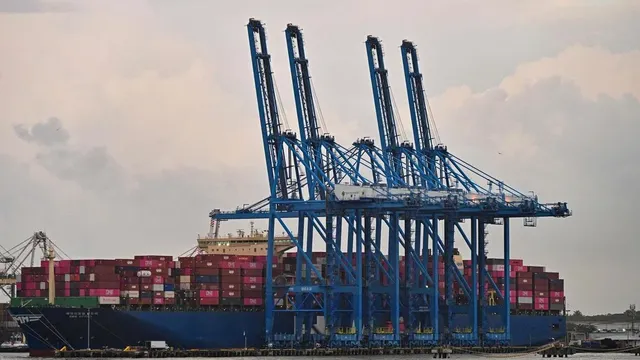
In Panama, a recent Supreme Court ruling annulled a contract held by Hong Kong's CK Hutchison to operate two key ports at the Panama Canal. This ruling, announced on January 29, is seen as a significant legal victory for the United States amid ongoing tensions and competition with China over trade routes. The court's decision cited constitutional violations and was described as a blow to Chinese interests in the region, as it raised concerns regarding exclusive privileges and tax exemptions granted to CK Hutchison's subsidiary, Panama Ports Company. Beijing responded vehemently, labeling the ruling as 'absurd' and 'shameful,' threatening potential political and economic repercussions for Panama if it does not reverse its decision. Given the strategic nature of the ports involved, operating at both the Pacific and Atlantic entrances of the canal, the ruling threatens not only CK Hutchison's future operations but also its plans to sell port assets in a $23 billion deal potentially involving American investment firms. Analysts suggest that this turn of events has strained US-China relations further, complicating diplomatic ties, especially since more than 70% of vessels using the canal are destined for the US, highlighting the waterway's importance for global trade. As a consequence of this court ruling, CK Hutchison announced that it would pursue arbitration against the Panamanian government to contest the decision. While China's leverage over Panama appears limited, some officials have indicated they may reconsider investments in the country as retaliation, further emphasizing the delicate balance of power in this region. Such geopolitical shifts underscore a broader struggle between the US and China over influence in Latin America, a region where China has invested considerably in infrastructure over the past decades, and where maintaining a foothold is critical for both nations' strategic interests.
Context
The relationship between the United States and China has evolved significantly over the past few decades, deeply affecting global politics, economics, and the control of key trade routes, including the Panama Canal. This waterway, completed in 1914, has always been a strategic asset, facilitating the transport of goods between the Atlantic and Pacific Oceans. With the rise of China's manufacturing capabilities and its increasing influence in international trade, the U.S. has had to reassess its position regarding the Panama Canal and its overarching relationship with Beijing. As China seeks to expand its economic footprint through initiatives like the Belt and Road Initiative, the importance of the Canal to U.S. interests is magnified, necessitating a careful navigation of diplomatic strategies to maintain influence in the region. In recent years, tensions between the U.S. and China have escalated due to numerous factors, including trade disputes, technological competition, and military posturing in the South China Sea. The U.S. perceives China's growing presence in Latin America, particularly through investments and infrastructure projects, as a challenge to its traditional dominance in the region. China's involvement in the Panama Canal area, coupled with its efforts to enhance trade relations with Central and South American countries, raises concerns in Washington about potential shifts in the balance of power. The U.S. aims to counteract this influence by strengthening its alliances with regional partners and promoting economic opportunities that can efficiently compete with Chinese investments. The geopolitical implications of U.S.-China relations extend to the management and operation of the Panama Canal itself. The canal is critical not only for the trade of goods but also for maritime security. Any significant change in the control or operational dynamics of the canal—whether through foreign investments or influence—can impact the U.S. and its allies. To address these issues, the U.S. has sought to engage with Panama, emphasizing security cooperation and ensuring that the canal remains accessible and secure from any unilateral influence that might disadvantage American interests or its allies in the region. This requires a balance of commercial diplomacy and military posture to safeguard the strategic importance of the canal while respecting Panama's sovereignty as the canal's owner and operator. In summary, the dynamic and complex nature of U.S.-China relations, particularly in the context of the Panama Canal, illustrates a significant geopolitical tension that underscores the importance of careful diplomatic engagement. As both powers seek to assert their influence in the region, the U.S. must navigate a multifaceted strategy that encompasses economic collaboration, regional partnerships, and military readiness to protect its interests. With the backdrop of an evolving global landscape, the future of U.S.-China relations will undoubtedly continue to shape the narrative on trade, security, and access to one of the world's most important waterways.


