

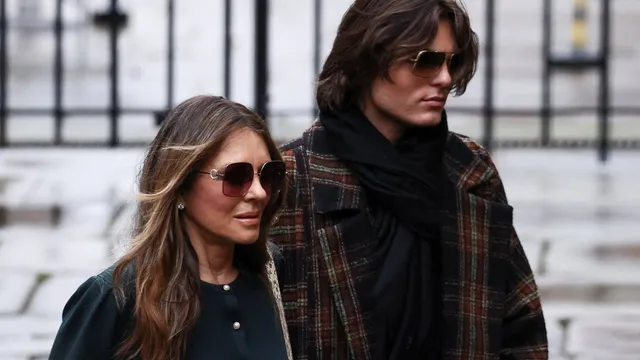
Elizabeth Hurley accuses Daily Mail publisher of horrific privacy violations
Elizabeth Hurley accuses Daily Mail publisher of horrific privacy violations
- Elizabeth Hurley testified about serious privacy violations by the Daily Mail's publisher, alleging phone tapping and other invasive actions.
- Prince Harry supported Hurley in court, sharing his family's struggles with media harassment and expressing the trauma it caused.
- The outcome of this lawsuit could have significant implications for privacy rights in journalism.
Story
In January 2026, Elizabeth Hurley testified against Associated Newspapers Limited, the publisher of the Daily Mail, in a privacy invasion lawsuit at the Royal Courts of Justice in London, England. Hurley alleged that from 2002 to 2011, her landlines were tapped, microphones were placed outside her windows, and her medical records were illegally accessed, reflecting a pattern of invasive journalism practiced by the publisher. The actress also expressed discomfort discussing events from her past, especially in front of her son, Damian, who has been present throughout the trial. The lawsuit contains claims from seven high-profile individuals, including the Duke of Sussex, Prince Harry, who also provided emotional testimony regarding the impact of media harassment on his family, describing it as a 'horrible experience.' The publisher vehemently denies any wrongdoing, suggesting that the claims are unfounded and that the articles were produced using legitimate sources. This case is significant for its implications on privacy rights and the involvement of notable public figures in challenging journalistic practices, particularly concerning the serious accusations of unlawful information gathering. As Hurley detailed her allegations, she recounted feelings of violation and sadness at the prospect of her son encountering invasive articles detailing her personal life. The ongoing trial, expected to last several weeks, highlights broader concerns regarding media ethics and accountability. It has spurred discussions in the court and public discourse about the need for stronger protections against privacy violations in journalism. Both sides are preparing for an intense legal battle, with Hurley and her fellow claimants hoping to bring attention to perceived misdeeds of prominent media entities while the publisher aims to defend its practices. The outcome of this case could either reinforce or challenge the current state of press laws in the UK, and reflect on the experiences of public figures subjected to relentless media scrutiny and invasive journalism tactics.
Context
The United Kingdom has established a complex framework of privacy laws and media ethics that governs the way personal information is handled and protected. The legal landscape is primarily shaped by the UK General Data Protection Regulation (GDPR), which came into effect in May 2018, and the Data Protection Act 2018. These regulations are designed to safeguard personal data and ensure that individuals have control over their personal information. Under GDPR, individuals can access their data, request corrections, and delete their information under certain circumstances. This legislative framework also imposes stringent obligations on media organizations to respect individuals' privacy rights, thereby balancing the right to freedom of expression with the need to protect personal privacy. In addition to the legal enforcement of privacy rights, media ethics plays a crucial role in the responsible reporting of news and information. The UK press is guided by various ethical codes, such as those enforced by the Independent Press Standards Organisation (IPSO). These codes typically emphasize the necessity of accuracy, fairness, and respect for privacy, mandating journalists to avoid sensationalism and undue intrusion into an individual’s private life. Breaches of ethical standards can lead to significant repercussions for media organizations, including loss of credibility and legal challenges. Consequently, ethical considerations serve as an essential mechanism for maintaining public trust and upholding the journalistic integrity that is critical in a democratic society. Moreover, high-profile cases in recent years have demonstrated the tension between privacy rights and media interests. Issues surrounding celebrity privacy, the reporting of private matters without consent, and investigative journalism have led to public debates about where to draw the line. For instance, cases involving unauthorized photographs or revelations about private lives have raised significant ethical questions. The outcomes typically prompt discussions on the necessity of reform in privacy laws and greater accountability within the media sector. This dynamic interplay illustrates that while the law provides a structured framework for privacy protection, ethical guidelines are pivotal in steering the behavior of media personnel, ensuring that their reporting adheres to public interest standards without infringing upon individual rights. The evolution of privacy laws and media ethics in the UK is ongoing, with advancements in technology continually reshaping the landscape. The rise of digital media and social networks presents unique challenges for privacy, as information can be disseminated rapidly and widely. Legal frameworks must adapt to address issues such as data breaches, online harassment, and the responsible use of personal information. Additionally, the role of media regulators is critical in guiding ethical journalism in an era marked by disinformation and competing narrative agendas. Ultimately, the success of privacy laws and media ethics hinges on a collaborative effort between lawmakers, media organizations, and the public to reinforce the ideals of respect for privacy and responsible reporting in a manner that reflects the values and concerns of contemporary society.


