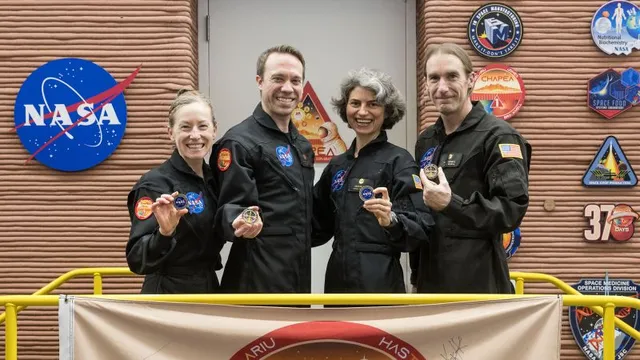
In the United States, NASA is set to begin a yearlong simulation program called the Moon and Mars Exploration Analog (MMEA) no earlier than August 2027. This initiative aims to replicate the experience of traveling and living on the Moon and Mars, providing valuable insights into the challenges astronauts may face during actual missions. The program will be conducted at the Johnson Space Center in Houston and will involve four selected participants who will undergo rigorous physical and psychological assessments to ensure they meet the necessary criteria for participation.
The MMEA program is divided into three segments, utilizing two distinct habitats to simulate different phases of space travel and habitation. The first segment will take place in a mock spacecraft, where volunteers will experience the journey from Earth to the Moon or Mars. Following this, participants will transition to a one-story facility designed to mimic living conditions on the surface of another planet. This facility will allow crew members to grow crops, manage their health, and practice spacewalking in a controlled environment that simulates planetary surfaces.
NASA has previously conducted 28 transit and two surface habitat simulations, but the MMEA will be the first to combine both aspects into a single project. The research aims to address the risks associated with long-duration space missions and how crew members adapt to the unique challenges of living on Mars time, which includes a Martian day being approximately 40 minutes longer than an Earth day. This adjustment could have significant implications for sleep patterns and overall health during missions.
The program is not only a scientific endeavor but also a personal journey for participants. Nathan Jones, a doctor from Illinois, shared his experience from a previous simulation, highlighting the emotional challenges of being away from family and the newfound appreciation for simple pleasures. The MMEA is expected to provide critical data that will inform future missions to Mars and contribute to the development of sustainable living conditions on other planets.