

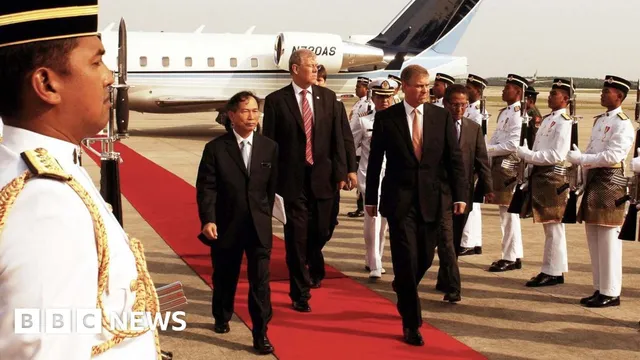
Queen pushed for prince Andrew's trade envoy role amidst scandal
Queen pushed for prince Andrew's trade envoy role amidst scandal
- In February 2000, documents indicate that Queen Elizabeth II wanted Andrew Mountbatten-Windsor to become the UK trade envoy.
- Concerns were raised about the lack of formal vetting for Andrew's appointment amidst ongoing investigations into his connections with Jeffrey Epstein.
- The situation has sparked wider discussions about the influence of the monarchy and transparency in public office appointments.
Story
In 2000, the British government released documents revealing that Queen Elizabeth II supported her son Andrew Mountbatten-Windsor for the role of UK trade envoy. The documents, disclosed during a parliamentary update, indicate that Queen Elizabeth expressed her desire for Andrew to succeed the Duke of Kent as the appointed trade envoy, a position that involved promoting trade interests both abroad and domestically. Despite her support, an investigation into Mountbatten-Windsor's associations has since raised concerns regarding his past dealings, particularly with convicted sex offender Jeffrey Epstein. Trade Minister Chris Bryant commented on the release of these documents, noting that no formal vetting process was conducted before Andrew’s appointment. This revelation sheds light on the government’s approach during that time, indicating that the royal family was actively involved in trade promotion without thorough background checks or scrutiny. The lack of due diligence has sparked debate regarding the appropriateness of selecting a member of the royal family for such influential roles. The investigation into Mountbatten-Windsor’s ties to Epstein, which emerged more than a decade after his appointment, has amplified public scrutiny. He was arrested by Thames Valley Police on suspicion of misconduct in public office, amidst allegations of leaking confidential government documents. Although he denies any wrongdoing related to Epstein, the situation has led to his removal of royal titles. The inquiry has brought forth questions about the legitimacy of the royal family's role in governmental functions, especially given the serious allegations surrounding Andrew. The broader implications of the trade envoy selection process have fueled conversations about power dynamics in the UK, particularly concerning the aristocracy and political elites. The intertwining of royal influence with public office continues to be a contentious issue, demanding transparency and accountability. Ultimately, Andrew’s past and the timing of these disclosures have drawn attention to how appointments are made and to what extent personal connections can overshadow professional qualifications.
Context
shift policy market policy geopolitical geopolitical global policy geopolitical data data impact impact economic strategic strategic trends shift trends policy global geopolitical policy policy analysis geopolitical market data global geopolitical economic data policy shift policy shift data global analysis policy data data strategic impact trends impact shift shift strategic trends policy economic global geopolitical strategic economic economic analysis global economic analysis analysis trends market economic strategic analysis data impact strategic global geopolitical market economic geopolitical economic economic analysis trends trends...


