

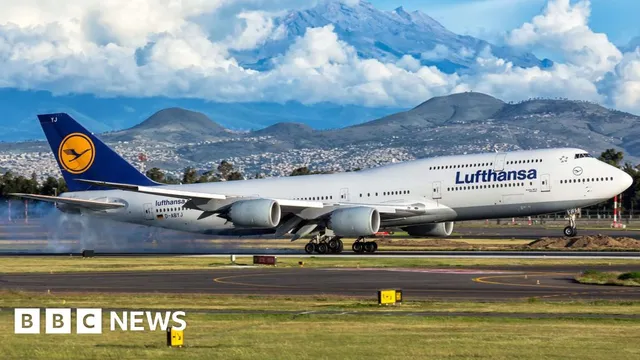
Lufthansa cuts thousands of flights due to skyrocketing fuel prices
Lufthansa cuts thousands of flights due to skyrocketing fuel prices
- Lufthansa plans to cut 20,000 short-haul flights due to increased fuel costs.
- Soaring jet fuel prices have been linked to the ongoing conflict between the US, Israel, and Iran.
- Travelers may face higher ticket prices and fewer flights as airlines adapt to the situation.
Story
Germany is facing significant disruptions in its aviation sector due to rising jet fuel prices that have seen a drastic increase since the onset of the US-Israel conflict with Iran in February 2026. Lufthansa, one of the main German airlines, announced plans to cancel 20,000 short-haul flights over the summer, stating that high fuel costs have rendered many routes economically unviable. The ongoing war has caused jet fuel prices to double, which the airline cites as a prime factor for its operational cuts. Affected passengers will have the option for refunds or alternative bookings with partner airlines. The conflict has triggered widespread concerns over fuel supply, especially since the Gulf region supplies a substantial portion of Europe's jet fuel, around 50%. Analysts predict that this situation may lead to a further increase in ticket prices and more cancellations across various airlines. Continued disruptions in the Strait of Hormuz, a critical channel for fuel transfer, have further exacerbated the issue, pushing prices beyond what airlines can manage profitably. Other airlines, including Delta and KLM, have also started cutting flights and increasing fares as they grapple with the increased operational costs. The International Energy Agency has warned that Europe is at risk of running short of jet fuel, although government officials in the UK believe that supply disruptions have not yet affected their operations significantly. To address this potential shortage, the European Union has announced plans to establish a fuel observatory aimed at assessing the production and import levels of essential transport fuels. As a result, airlines are expected to make more adjustments, with some routes possibly seeing permanent cuts. The broader implications of these fuel shortages highlight a fundamental change in air travel dynamics. With fewer flights available, airlines may have to prioritize available cargo or passenger numbers to ensure manageable weight for takeoff. Passengers could be faced with increased waiting times for flights, with cancellations potentially leading to significant delays. As the situation continues to evolve, travelers may need to brace for even more changes in air travel and pricing strategies, as airlines navigate this unprecedented crisis in the aviation fuel market.
Context
The ongoing conflict between the United States and Israel has significant ramifications for international fuel prices. The geopolitical landscape in the Middle East is highly complex, and the US-Israel alliance has been both a source of stability and a catalyst for volatility in the region. Historically, any military engagement or sustained conflict in this area has led to fluctuations in oil supply and demand, often resulting in increased prices. The intertwining of military actions with economic repercussions highlights how security concerns can rapidly translate into market reactions, affecting consumers globally. As the situation evolves, analysts closely monitor responses from oil-producing nations and organizations that affect pricing structures worldwide. In recent years, the world has witnessed a considerable shift in energy dynamics, especially with the increase in domestic production of oil and natural gas in the United States. As a net exporter of energy, the US plays a crucial role in influencing global fuel prices. However, an escalated US-Israel conflict can disrupt perceptions of stability, leading to fear-driven purchasing behaviors among consumers and corporations alike. When uncertainty looms, investors may seek to hedge against potential price rises by inflating prices preemptively, which exacerbates the situation. Moreover, supply chain disruptions due to conflicts can lead to increased transportation costs, further pushing prices upward. The impact on international fuel prices is also exacerbated by the response from OPEC and other oil-exporting countries. Increased demand from other entities looking to secure oil supplies during times of uncertainty could lead to price hikes. Additionally, tensions in the region can prompt strategic responses from these nations, such as production cuts or increases, which can directly affect global oil markets. The risk of military escalation can also prompt international regulatory responses, creating a complex landscape for oil markets. As a direct strategy against high prices, investing in alternative energy solutions and diversifying energy sources is likely to gain traction among nations seeking to mitigate their dependence on oil. Finally, the long-term effects of the US-Israel war on international fuel prices may ultimately reshape global energy strategies as countries evaluate their own energy security in light of potential conflicts. The volatility introduced by conflicts such as this not only leads to immediate fluctuations in prices but also forces nations to reconsider their energy sourcing and consumption patterns, potentially driving innovation in energy technology and sustainable practices. Understanding these multi-faceted interactions is crucial for policymakers and market analysts alike to anticipate future trends and prepare for the impacts that heightened geopolitical tensions may impose on global fuel prices.


