

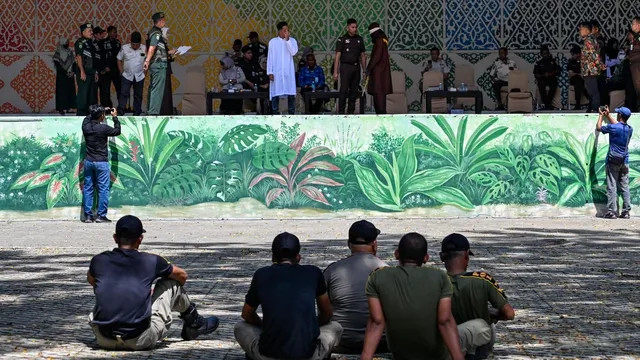
Couple receives record 140 cane lashes for violating Islamic law in Aceh
Couple receives record 140 cane lashes for violating Islamic law in Aceh
- On January 29, 2026, a couple was caned 140 times each for violating Islamic law in Aceh, Indonesia.
- The punishment was delivered publicly, with 100 lashes for sex outside marriage and 40 for consuming alcohol.
- This incident highlights the ongoing debate over the practice of caning and its implications for human rights in the region.
Story
In Aceh province of Indonesia, a couple was publicly caned 140 times each on January 29, 2026, for engaging in sexual relations outside of marriage and consuming alcohol, both offenses under the local implementation of Islamic law. This incident marks one of the highest recorded numbers of cane strokes delivered since the province adopted syariah in 2001, as it seeks to enforce its strict moral codes among residents. Reporting on the event indicated that the couple was subjected to this punishment in front of onlookers, highlighting the public nature of such legal penalties. The 21-year-old woman fainted after enduring her punishment and required medical assistance, while a man received the same treatment. The specific breakdown of the lashes issued included 100 strokes for having sex outside marriage and 40 strokes for alcohol consumption, according to Banda Aceh’s syariah police chief, Muhammad Rizal. This event underscores the severe implications of violating Islamic law in the region, which serves as Indonesia's only province enforcing such legal codes. Additionally, during the same public caning, a total of six individuals faced punishment, including a police officer who was caught in an inappropriate situation with a female partner, resulting in 23 lashes for each of them. Mr. Rizal emphasized their strict adherence to the law, indicating that they would not spare any exceptions, even for their department members, as a commitment to uphold the integrity of the law enforcement agency. The incident was widely reported, garnering attention for its stark representation of the implementation of sharia justice in a modern society. Public caning remains a contentious topic, drawing criticism from numerous human rights organizations. Many advocate for abolishing this practice, labeling it cruel and inhumane, while proponents in Aceh argue it serves as a deterrent against immorality and crime. The event has reignited debates about the balance between cultural practices, law enforcement, and human rights in a region that is deeply rooted in Islamic traditions, exemplifying the tensions surrounding legal dualism in Indonesia and the diversity of opinions on moral governance.
Context
The impact of Sharia law in Aceh has been a significant and multifaceted topic that warrants careful examination. Aceh, a province in Indonesia, has implemented Sharia law since 2001, following its special autonomy status after a long-standing conflict for independence. The adoption of Sharia law has instigated considerable changes in social, legal, and cultural practices within the province. Supporters argue that it promotes morality and social order, reflecting local values and the religious beliefs of the predominantly Muslim population. However, critics contend that the law often leads to human rights violations and exacerbates societal inequality, particularly against women and minorities. One of the most visible impacts of Sharia law in Aceh is the enforcement of dress codes and behavior, which tends to adhere strictly to Islamic principles. Women in Aceh are mandated to wear hijabs in public spaces, and violations can lead to public reprimand or fines. This regulation has sparked debates about personal freedom and gender equality, with many women opposing such measures that they view as oppressive. In addition to dress codes, the legal system in Aceh enables the enforcement of other punishments based on Islamic jurisprudence, which include caning for offenses such as adultery and alcohol consumption. This brutal form of punishment has raised significant human rights concerns, drawing criticism from various local and international organizations. Economically, the influence of Sharia law has led to the growth of Islamic-based economic practices, including the establishment of Sharia-compliant banks and microfinance institutions. This shift has opened doors for financial services that align with Islamic principles. Supporters claim that this promotes economic stability and encourages ethical investing. However, some counter that the growth of Sharia finance does not necessarily equate to overall economic development, as it may limit non-Muslim participation in financial undertakings and potentially isolate certain economic sectors. Furthermore, the focus on religious frameworks can sometimes overshadow pressing economic issues, such as poverty alleviation and job creation, which require a more inclusive approach. Moreover, the cultural impact of Sharia law in Aceh extends beyond legal implications, influencing daily life and societal norms. Traditional customs and practices often merge with Islamic teachings, creating a unique cultural landscape that may differ significantly from other Indonesian provinces. While some view this as a positive reinforcement of cultural identity, others fear it marginalizes non-Islamic influences and breeds intolerance. As Aceh continues to navigate its identity under Sharia law, the balance between traditional norms and modern rights remains delicate. The ongoing discourse around Sharia law's implementation is essential for understanding its broader implications on governance, human rights, and social cohesion in Aceh.


