

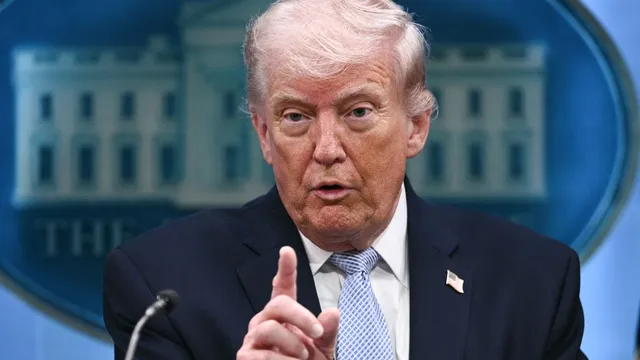
Donald Trump launches attack on Fox News hosts Jessica Tarlov and Shannon Bream
Donald Trump launches attack on Fox News hosts Jessica Tarlov and Shannon Bream
- Donald Trump criticized Shannon Bream for failing to challenge a Democratic representative during her show.
- He labeled Jessica Tarlov a 'loser' and urged for her removal from Fox News.
- Trump's criticisms signal a shift in his relationship with the network and raise questions about media dynamics.
Story
In recent days, Donald Trump expressed his dissatisfaction with Fox News, specifically targeting hosts Shannon Bream and Jessica Tarlov. Trump accused Shannon Bream of not effectively challenging Democratic Representative Jake Auchincloss during her program. He claimed that her show was not hard-hitting enough and criticized her for mislabeling a Republican-backed piece of legislation known as the "Save America Act." Additionally, Trump directed scathing remarks at Democratic strategist Jessica Tarlov, who appears on the show The Five. He referred to her as a "loser" and expressed a desire for Fox News executives to remove her from the airwaves. According to Trump, her presence on television was unbearable for viewers. The backlash against Fox News from Trump is significant considering the network's historically supportive stance toward him and his administration. Trump's condemnation reflects his deteriorating relationship with the network, which he has often relied upon for favorable coverage. Trump's claims resonate within a broader discourse on the media's role, the nature of political commentary, and the expectations of audiences regarding fair and balanced reporting. This development is indicative of the ongoing tensions that can exist between political figures and news media organizations. Trump's commentary on social media platforms, particularly Truth Social, has become a new battleground for his criticisms, signaling a shift toward a more confrontational approach to media that doesn't align with his views. The consequences of these confrontations may affect how networks like Fox News navigate their coverage of political figures like Trump.
Context
In recent years, Donald Trump has been known for his vocal criticism of various media outlets and personalities, including those within Fox News. Trump has leveraged social media, particularly his platform on Truth Social, to express his discontent regarding the network's coverage and the opinions of specific hosts. This criticism often stems from his belief that certain shows or personalities are not loyal to him or his agenda. Notably, he has targeted prime-time hosts and commentators whom he perceives as having turned against him or not adequately representing his views on key political issues, especially in the aftermath of the 2020 presidential election and the subsequent events that unfolded at the Capitol on January 6, 2021. This criticism has not only caused a stir within GOP ranks but has also highlighted the tensions between Trump and a network that was once seen as a steadfast ally in the conservative media landscape. Trump's discontent became particularly apparent during periods of electoral tension and controversies surrounding his administration. For instance, during the 2020 election cycle, he criticized Fox News for calling states like Arizona early for Joe Biden, which contradicted his narrative of a secure reelection. In response to these criticisms, some Fox hosts appeared to shift their coverage to cater to Trump's base, while others maintained a more critical stance, leading to further discord. As time progressed, Trump's relationship with the network grew increasingly complicated as he accused various hosts of being "disloyal" and failing to support his claims regarding election fraud. This tension illustrates a significant schism within the Republican Party, where the influence of Trump's rhetoric continues to shape the media landscape. As part of this ongoing conflict, Trump's criticism has also spotlighted the broader issue of media trust among his supporters. Many followers have adopted a skeptical view of mainstream media, including parts of Fox News, often rallying behind alternate media platforms that more consistently align with Trump's views. This shift reveals a transformation in how conservative audiences consume news and opinions, suggesting that a portion of the audience is drawn to platforms that they believe reinforce their beliefs and validate their loyalty to Trump. Such dynamics raise critical questions about the future of media credibility and the implications of having prominent political figures challenge traditional news outlets openly. This evolving relationship between Trump and Fox News reflects broader trends in American media and politics, where partisan affiliations increasingly influence public perception. Trump's willingness to publicly criticize a network that once enjoyed his support serves as a reminder of the delicate balance that media outlets must maintain in catering to their audiences while also striving for editorial integrity. In summary, Trump's critique of Fox News hosts illustrates a pivotal moment in both media and politics, highlighting the continued realignment of conservative media in the face of a complex political environment.


