

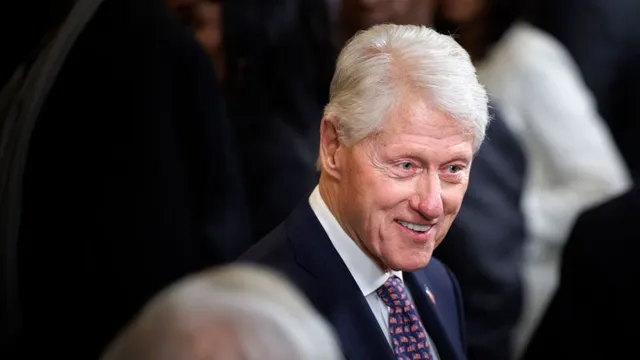
Bill Clinton testifies in Epstein probe for first time in over 40 years
Bill Clinton testifies in Epstein probe for first time in over 40 years
- Bill Clinton's testimony marks the first time a former president has testified before Congress in over 40 years.
- The deposition focuses on Epstein's network and explores the implications of the Clintons' connections.
- The investigation may set precedents for future inquiries involving former presidents.
Story
In February 2026, former President Bill Clinton testified before the House Oversight Committee in Chappaqua, New York, marking a rare occasion as no sitting or former president had done so since 1983. This testimony was part of a broader investigation into Jeffrey Epstein's network and how he avoided federal prosecution. Bill Clinton acknowledged his prior association with Epstein, notably flying on his plane in 2002 and 2003 while conducting Clinton Foundation work. Meanwhile, both Clinton and his wife, former Secretary of State Hillary Clinton, faced scrutiny regarding their connections to Epstein, as she had previously denied any direct interaction with him. The House Oversight Committee had subpoenaed the Clintons in 2022 to explore Epstein’s network of associates after Epstein's death while incarcerated on federal sex trafficking charges. Former Committee Chair James Comer of Kentucky highlighted that this investigation was not aimed at accusing the Clintons of any crimes but rather understanding Epstein’s influence and operational network. Emerging from this testimony was a call by Democratic members of the Committee for former President Donald Trump to similarly testify, suggesting a shift in the precedent concerning former presidents being questioned by Congress. Trump's involvement with Epstein and his accusations against Bill Clinton regarding visits to Epstein's island were addressed; both Clinton and records do not support such claims. In the aftermath of this testimony, expectations arose for a public release of the deposition and any associated materials once they were reviewed. The context surrounding Clinton's testimony also involves ongoing scrutiny of Trump's history with Epstein and an assertion from the Clinton camp that the committee’s focus on them was a distraction from Trump’s actions. Clinton representatives indicated that existing data underscored potential protective measures around certain involved parties. Addressing these complexities, both Clintons stressed their lack of substantial information that could clarify details of Epstein's trafficking operations or his broader network. This situation reflects an evolving landscape where congressional investigations are increasingly targeting high-profile figures, potentially marking a precedent for future inquiries involving all presidents. As the fallout continues, it remains to be seen how these developments will impact political dynamics, particularly as the committee seeks further testimonies that may bring additional context to the troubling connections involved with Epstein's extensive criminal activities.
Context
The House Oversight Committee has played a significant role in investigations related to Jeffrey Epstein, a financier charged with sex trafficking of minors. This involvement highlights the committee’s broader mandate to oversee government operations and address public concerns regarding transparency and accountability. Following Epstein's arrest in July 2019 and subsequent death in jail, the committee initiated its inquiry to scrutinize the circumstances surrounding the handling of Epstein’s case by law enforcement and judicial entities. Their focus included the infamous plea deal struck in 2008, which allowed Epstein to serve only 13 months in a county jail under lenient conditions, despite the serious nature of the accusations against him at that time. In 2020, the committee conducted hearings to gather testimony from various stakeholders, including government officials and victims of Epstein’s trafficking. The aim was to uncover the gaps and failures in the legal system that enabled Epstein's alleged criminal activities to persist for years without significant consequence. Through these sessions, the committee sought to shed light on how Epstein leveraged his wealth and connections to evade justice, as well as to understand systemic issues within law enforcement and prosecutorial offices. This process not only ensured that Epstein’s actions were scrutinized but also aimed to address broader systemic changes necessary to prevent similar scenarios in the future. Additionally, the committee’s reports have emphasized the need for legislative reforms that enhance the protections for victims of trafficking and ensure that survivors have a platform to share their stories without fear of retribution. This is paramount, given that many victims struggle with the stigma attached to their experiences and often feel invisible within the justice system. By advocating for more robust laws and policies, the Oversight Committee aims to create a safer environment, particularly for vulnerable populations who are at risk of exploitation. The implications of the House Oversight Committee's work extend beyond Epstein’s case, setting precedents for how federal and state governments handle issues related to trafficking and abuse. The investigation has led to increased awareness and public discussions about trafficking, with an emphasis on community education and preventative measures. As the committee continues its work, it remains committed to holding accountable those who failed to protect victims and to ensuring that the narrative surrounding Epstein's case informs future legislation that prioritizes justice for survivors.


