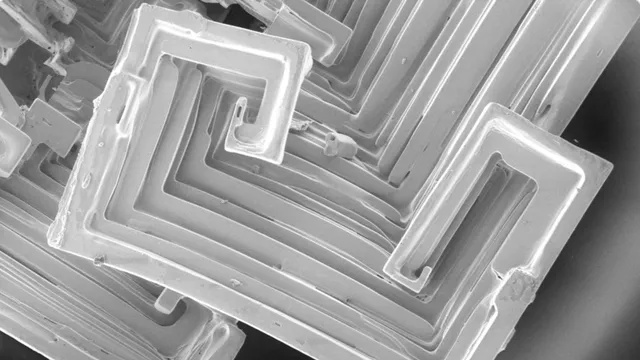
In a remarkable display of science aboard the International Space Station (ISS), astronauts have successfully grown potassium chloride crystals, showcasing a unique behavior that defies typical terrestrial expectations. This event occurred recently, with images and videos shared by NASA astronaut Don Pettit on July 18, 2026. The crystals exhibit a scroll-like, pyramid-like structure that is visually striking and scientifically significant. The near-weightless environment of microgravity allows these crystals to grow in ways that are nearly impossible to replicate on Earth, where gravity typically influences the growth process.
The phenomenon of crystal growth in microgravity is attributed to the reduced gravitational forces experienced by astronauts, which are approximately a million times weaker than those on Earth's surface. This reduction allows other forces, such as molecular attraction and polarity, to dominate the growth process. As a result, the potassium chloride crystals grow outward from their edges and corners, rather than across their faces, leading to the formation of hollow centers and intricate structures. This process is known as hopper growth, and it is not limited to potassium chloride; ordinary table salt can exhibit similar growth patterns under microgravity conditions.
The implications of this research extend beyond mere visual appeal. Scientists believe that materials grown in microgravity often have fewer defects, providing a clearer understanding of what an ideal crystal structure looks like. This insight could be invaluable for refining manufacturing processes for semiconductors and other advanced materials on Earth. The ability to grow crystals without the interference of gravity opens up new avenues for research and development in various scientific fields.
In addition to its scientific significance, the stunning images of crystal growth serve to inspire curiosity and interest in space science. Anne Wilson, a professor of chemistry and biochemistry at Butler University, expressed her enthusiasm for such experiments, highlighting how even simple substances like potassium chloride can yield fascinating results in space. The ongoing research aboard the ISS continues to reveal the complexities of material behavior in microgravity, encouraging further exploration and understanding of the universe's fundamental principles.