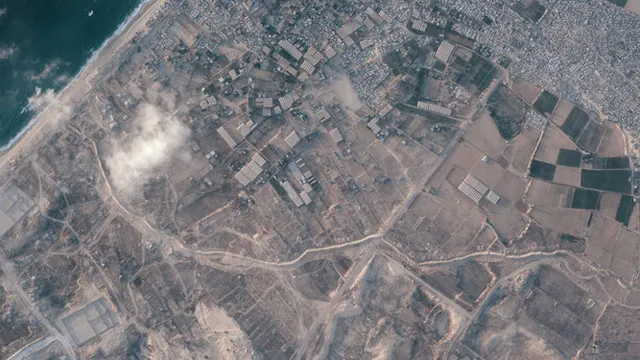
The Gaza conflict has a complex and multifaceted history, rooted in the broader Israeli-Palestinian conflict. The origins of the conflict can be traced back to the early 20th century, with the rise of nationalist movements among both Jews and Arabs in the region. The establishment of the State of Israel in 1948 led to the first Arab-Israeli war, resulting in significant displacement of Palestinian Arabs, many of whom sought refuge in the Gaza Strip. This area, which was under Egyptian control until 1967, became a focal point for Palestinian nationalism and resistance against Israeli policies. The 1967 Six-Day War resulted in Israel's occupation of Gaza, further intensifying tensions and leading to a cycle of violence and retaliatory actions from both sides.
In the late 20th century, the rise of the Palestinian Liberation Organization (PLO) and later Hamas, which emerged in the late 1980s, marked a significant shift in the dynamics of the conflict. Hamas, an Islamist militant group, gained popularity among Palestinians in Gaza due to its social services and its stance against Israel. The First Intifada (1987-1993) was a grassroots uprising against Israeli occupation, which saw widespread protests and violence. The Oslo Accords in the 1990s aimed to establish a framework for peace and the eventual creation of a Palestinian state, but the agreements failed to resolve key issues, including the status of Jerusalem, refugees, and borders.
The early 2000s saw a resurgence of violence, particularly during the Second Intifada, which was marked by suicide bombings and military operations. In 2005, Israel unilaterally withdrew its settlers and military from Gaza, but the territory remained under blockade, leading to dire humanitarian conditions. In 2006, Hamas won a majority in the Palestinian legislative elections, leading to a violent power struggle with the rival Fatah party. This culminated in Hamas taking control of Gaza in 2007, resulting in a split in Palestinian governance and further isolating the territory from the West Bank.
Since then, multiple conflicts have erupted between Israel and Hamas, notably in 2008-2009, 2012, and 2014, each resulting in significant casualties and destruction in Gaza. The blockade imposed by Israel and Egypt has severely restricted the movement of people and goods, exacerbating the humanitarian crisis. Efforts for peace have been complicated by ongoing settlement expansion in the West Bank, political divisions among Palestinian factions, and regional dynamics involving neighboring countries. As of 2026, the situation remains tense, with periodic escalations in violence and a lack of a comprehensive resolution in sight, highlighting the urgent need for renewed dialogue and international intervention to address the underlying issues of the Gaza conflict.