

Paramount's superior bid forces Netflix to withdraw from Warner Bros. Discovery auction
Paramount's superior bid forces Netflix to withdraw from Warner Bros. Discovery auction
- Netflix decided to withdraw its bid for Warner Bros. Discovery after learning that Paramount submitted a superior offer.
- CNN asked its employees about the potential impacts of corporate changes, revealing a tense and anxious atmosphere.
- The ownership change could lead to significant shifts in CNN's management and direction.
Story
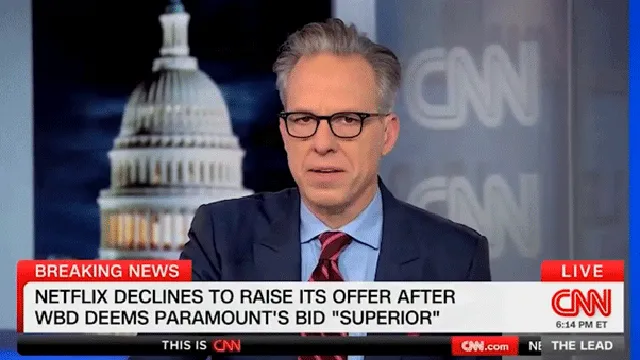
On February 26, 2026, in the United States, CNN host Jake Tapper reported significant developments regarding the media landscape as Netflix announced its withdrawal from the bid to acquire Warner Bros. Discovery, the parent company of CNN. This decision followed the revelation that Paramount Pictures had submitted a more attractive offer for all of Warner Bros. Discovery's assets, including CNN, which left staff at the network feeling anxious and uncertain about their future. Tapper highlighted the implications of the change, referring to the mood at CNN as 'horrific,' with insiders expressing feelings of despair and concern about potential layoffs. This scenario unfolded as Paramount's bid not only encompassed Warner Bros. Studios and HBO but all assets under the Warner Bros. Discovery umbrella. In light of Paramount's superior offer, the Warner Bros. Discovery board opted to accept it over Netflix's previous bid. According to sources within CNN, the atmosphere within the network was tense as employees contemplated the impacts of potential mergers and changes in leadership, particularly given the history of corporate mergers in the industry. Staffers were particularly aware of recent layoffs and strategic shifts that have taken place at CBS News after the leadership changes prompted by CEO David Ellison's takeover. David Ellison, known for his close ties to political figures and for shaking up CBS News with editorial decisions that challenged the previous liberal stance, now poses a significant influence over CNN's operational direction. The news from Tapper brought to the forefront concerns regarding the potential for further layoffs or reorganization within CNN, which has already experienced multiple transitions in management and strategic outlooks over the past decade. Numerous CNN staff members expressed a mix of apprehension and curiosity, questioning who would face termination under the new ownership. The situation underscores the competitive nature of major media corporations in the current market, where mergers and acquisitions can lead to sweeping changes not only in corporate strategy but in personnel and institutional culture as well. As the media landscape continues to evolve, the implications of these corporate decisions on the journalistic integrity and operational focus of networks like CNN will be closely observed, particularly by those who are aware of the significant changes that have occurred in similar instances across the industry in recent years.


