

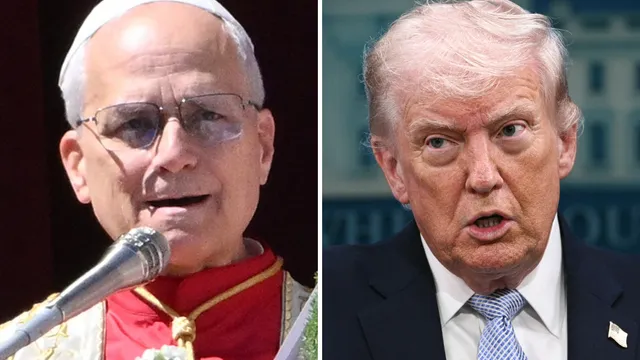
Trump loses Catholic support amid Vatican tensions
Trump loses Catholic support amid Vatican tensions
- Recent surveys indicate a significant decline in President Trump's approval ratings among U.S. Catholics.
- Pope Leo XIV has openly criticized Trump's foreign policies, particularly regarding Iran.
- These shifts in voter sentiment may have major implications for the upcoming 2026 elections.
Story
In early 2026, tensions between the Trump administration and the Vatican intensified, particularly regarding foreign and domestic policies. Recent events surrounding a January meeting between senior Pentagon officials and the Vatican ambassador sparked scrutiny. Vice President JD Vance indicated he would investigate claims regarding this meeting, which alleged that the Vatican was pressured to endorse U.S. military tactics. Around this time, polling data revealed that President Donald Trump's approval ratings among Catholic voters were declining significantly. The feedback from U.S. Catholics was largely influenced by Pope Leo XIV’s criticisms of Trump’s rhetoric, particularly concerning the Iran conflict. In the wake of increasingly negative sentiments towards Trump, Pope Leo XIV's popularity among Americans, including Catholics, has surged. Poll data from the Pew Research Center indicated a decline in Trump’s approval ratings across various demographics of Catholics. For instance, approval among white Catholics fell from 59 percent to 52 percent, and among Hispanic Catholics, it decreased from 31 percent to 23 percent. Meanwhile, support for the Pope has grown, with a net positive of 34, surpassing Trump’s negative net ratings. The decline in Trump's approval may foreshadow significant political ramifications ahead of the 2026 midterms, as voter sentiment shifts toward the pontiff, who has actively called for a more ethical approach to governance. The U.S. Catholic community's growing disenchantment with Trump has prompted discussions on how religious voting blocs might influence future elections. Pope Leo XIV's recent public statements denouncing Trump's approach to the Middle East and migration reflect a broader sentiment among Catholics who previously favored Trump in the 2024 elections. The pontiff advised Catholics to consider the implications of their votes carefully, reinforcing the idea of choosing a 'lesser evil' when contemplating political candidates. As a result of this delicate relationship between the Trump administration and the Vatican, U.S. Catholics may increasingly feel disconnected from Trump's agenda, particularly as the Holy See advocates for peace and humanitarian considerations. Looking ahead, attention will remain focused on the evolving dynamics of U.S.-Vatican relations and the implications for the Trump administration. As new polling data emerges, it is apparent that Trump's policies and communication strategies have entered a phase of scrutiny that could affect his support base among Catholics. In light of Pope Leo's strong stance on pressing global issues and his emphasis on ethical leadership, the potential for a significant electoral shift in favor of candidates aligning more closely with these values could reshape the landscape of American politics in the coming months.
Context
The impact of Catholic voters on U.S. elections has been substantial, yet often underappreciated. Historically, Catholics have played a pivotal role in shaping electoral outcomes due to their significant numerical presence and diverse political affiliations. As a group, they tend to be more moderate compared to other religious voters, often straddling the ideological divide between the Democratic and Republican parties. This unique position allows Catholic voters to influence key races, particularly in swing states where their votes can be crucial for either party. The importance of the Catholic vote has only increased in recent years as demographic shifts and changing political landscapes have redefined voting trends within this community. In recent elections, the Catholic demographic has shown varied preferences that reflect both national issues and local concerns. For instance, issues such as social justice, healthcare, and education resonate deeply within Catholic communities, influencing their voting motivations. The Catholic Church’s teachings on these topics can sway opinions and mobilize voters towards candidates who align with their values. Moreover, the generational shift within the Catholic community is significant; younger Catholics, for instance, often prioritize progressive issues which can lead to shifts in traditional voting patterns. Consequently, candidates aiming for success must engage deeply with Catholic voters, understanding their changing needs and concerns to effectively rally support. The political affiliations of Catholic voters are notably diverse, as they comprise a wide range of socio-economic backgrounds and perspectives. This diversity often leads to split voting behavior in elections, with some Catholics favoring conservative candidates who emphasize family values and religious liberties, while others support liberal candidates advocating for social equity and environmental responsibility. This dichotomy illustrates the complexity of the Catholic electorate, making blanket statements about their preferences less effective. Political strategists must consider regional variations and local contexts to accurately gauge the Catholic vote in any election cycle. As the 2026 elections approach, it remains imperative for candidates to acknowledge the influential role of Catholic voters in shaping U.S. electoral dynamics. Addressing issues that matter to this community while respecting their diverse viewpoints will be key to swaying votes. Political engagement strategies that resonate with both traditional and progressive Catholics can bolster voter turnout and secure crucial wins in contested districts. In essence, the Catholic vote is not merely a bloc to be won, but a spectrum of values and priorities that, when engaged thoughtfully, can lead to considerable electoral impact.


