

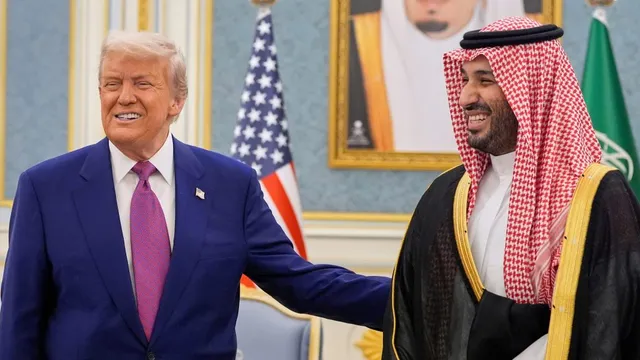
Crown prince visits the White House amid renewed ties
Crown prince visits the White House amid renewed ties
- Crown Prince Mohammed bin Salman is visiting the White House for an official working visit with high-level discussions planned.
- The meeting will include economic and defense agreements aimed at strengthening U.S.-Saudi ties.
- This visit marks a significant diplomatic evolution for the crown prince, who faced backlash over the Khashoggi incident.
Story
In a significant diplomatic development, Crown Prince Mohammed bin Salman of Saudi Arabia is visiting the United States for the first time since the controversial killing of journalist Jamal Khashoggi in 2018. The White House is preparing for this official working visit, planned for a Tuesday and featuring traditional ceremonial elements akin to a state visit. The discussions will include crucial economic and defense agreements aimed at reinforcing ties between the two nations, underscoring the ongoing importance of Gulf relations in U.S. foreign policy. During this visit, President Donald Trump is expected to engage with the crown prince on various significant topics, including security and investment partnerships. This meeting is the culmination of efforts by both the Trump and Biden administrations to mend relationships with Saudi Arabia, following years of tension due to accusations surrounding Khashoggi's death and broader human rights concerns. The meeting will also see an East Room dinner hosted by First Lady Melania Trump. It occurs against a backdrop of the Gulf state's ambitions to transform its economy while stabilizing security in the region. By hosting the crown prince, the Trump administration is reaffirming its commitment to these strategic alliances, reflecting the critical position that Saudi Arabia occupies in the Middle East. As the prince prepares for high-stakes discussions at the White House, he arrives with a significant entourage, indicating a shift in his international standing since his previous visits. Once viewed with skepticism following the Khashoggi incident, he now appears more confident and influential, buoyed by the economic initiatives he has implemented in Saudi Arabia. These include diversifying the kingdom's economy and enhancing cultural engagement within the global arena, positioning Saudi Arabia as a more modern state. In the context of regional diplomacy, the American administration hopes to leverage this visit to further align interests, particularly regarding defense cooperation and investment. As Saudi Arabia seeks to negotiate its international relationships strategically, Crown Prince Mohammed bin Salman’s arrival marks a pivotal moment in a broader narrative of diplomacy in an increasingly complex geopolitical landscape, heralding the start of what could be a new chapter in U.S.-Saudi relations.
Context
The US-Saudi economic defense agreements have evolved significantly over the decades, reflecting the changing geopolitical landscape and the mutual interests of both nations. These agreements generally focus on defense procurement, military collaboration, and broader economic ties that benefit both countries. The essence of these agreements lies in the robust economic and military partnership that underpins regional stability in the Middle East. They also aim to ensure that Saudi Arabia has access to advanced military technology and training from the United States, which supports the kingdom’s defense modernization efforts against regional threats, particularly from countries like Iran. Historically, the relationship between the US and Saudi Arabia began in the mid-20th century, primarily driven by oil interests and the implications for global energy markets. Over the years, this partnership has expanded beyond oil to include joint military exercises, arms sales, and defense strategy collaborations. The US has been a significant supplier of advanced military equipment to Saudi Arabia, which has, in turn, invested heavily in US defense firms and technologies. The agreements have also facilitated Saudi Arabia's entry into international arms markets, helping the country diversify its military procurement sources and capabilities. In recent years, the focus of these agreements has also shifted towards addressing common threats. Issues such as counterterrorism, cybersecurity, and regional conflicts have prompted closer defense cooperation. Both nations benefit from intelligence sharing and coordinated military operations, which are crucial for managing regional tensions. The US's commitment to Saudi security is evidenced by continuous military presence and strong political ties, underscoring the strategic nature of their relationship. Furthermore, as global dynamics shift, particularly with the rise of emerging powers, Saudi Arabia is adapting its defense strategies, necessitating ongoing consultations and agreements with the US. The future of US-Saudi economic defense agreements will likely hinge on the stability of the region and the political climate in both countries. As they continue to navigate the complex issues of energy, security, and economic diversification, it will be essential for both nations to reassess and update their agreements to meet the evolving challenges. The outcomes of these efforts will not only impact the US-Saudi relationship but will also have significant implications for broader Middle Eastern policies and security dynamics.


