

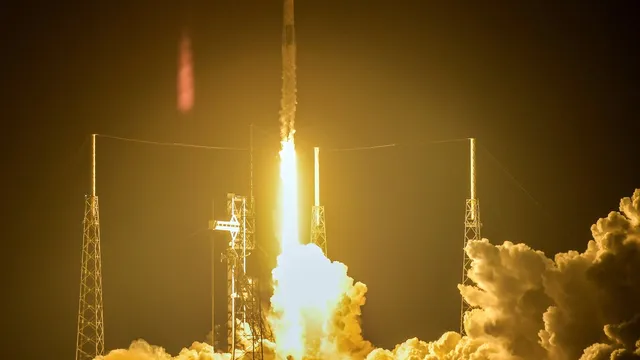
NASA launches new crew to ISS following medical evacuation
NASA launches new crew to ISS following medical evacuation
- An international crew was launched to the ISS to replace astronauts who returned early due to health concerns.
- NASA made the decision to launch without additional health check-ups prior to liftoff.
- The new arrivals will prepare for future missions by testing advanced medical technologies and improving operational protocols.
Story
On January 7, 2026, NASA dispatched an international crew to the International Space Station (ISS) to take over from astronauts who returned prematurely due to a medical issue, marking a significant event in human spaceflight. The team, comprising Jessica Meir and Jack Hathaway from NASA, Sophie Adenot from France, and Andrei Fedyaev from Russia, was necessary to restore full staffing at the ISS following the unprecedented medical evacuation earlier. This situation prompted the postponement of spacewalks and other essential operations on the ISS until the new squad’s arrival. Upon their arrival, the crew joined three astronauts who had maintained the station’s operations during the previous month. Unlike regular missions where additional health assessments are standard, NASA opted for no further check-ups ahead of the launch, reassured by the effectiveness of existing medical protocols. Notably, an ultrasound machine already stationed at the ISS was utilized in response to the medical needs of the crew member who faced health issues. However, details regarding the identity and health problem of the affected astronaut remain undisclosed by NASA. To prepare for upcoming missions to the Moon and Mars, where healthcare provisioning will become more complicated, the new astronauts are tasked with testing advanced medical technologies. These include a water filter designed to convert drinking water into emergency IV fluid and an AI-assisted ultrasound system that enhances diagnostic capabilities without needing ground experts present. Furthermore, their mission involves conducting a study on blood clot issues through ultrasound scans of their jugular veins and simulating moon landing skills to enhance interstellar preparation. The inclusion of Sophia Adenot signifies a remarkable milestone, as she is only the second French woman to travel into space, inspired by a landmark flight in 1996. As new members to space travel, both Hathaway and Adenot look forward to contributing to the ISS operations. Meanwhile, Meir, returning for her second mission, reflects on the transformative era of astronautics as they near the Artemis II mission, underscoring her excitement about their concurrent work in orbit with fellow astronauts. This collaborative experience between crews symbolizes the progressive nature of space exploration and the shared ambition to further human presence beyond Earth.


