

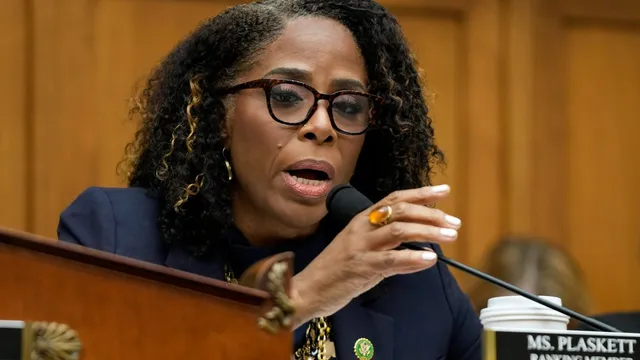
Stacey Plaskett texted Jeffrey Epstein during congressional hearing
Stacey Plaskett texted Jeffrey Epstein during congressional hearing
- Newly released documents reveal text exchanges between Del. Stacey Plaskett and Jeffrey Epstein during Michael Cohen's House Oversight testimony.
- The texts indicate Epstein provided real-time advice on Plaskett's questions about Trump's former aide Rhona Graff.
- This revelation highlights Epstein's attempts to exert influence over political figures and raises questions about the interaction's implications.
Story
In February 2019, during a House Oversight Committee hearing concerning Michael Cohen's testimony, text messages between Del. Stacey Plaskett and Jeffrey Epstein were exchanged. Plaskett, a Democratic nonvoting delegate from the U.S. Virgin Islands, appeared to seek guidance from Epstein while waiting to question Cohen about President Donald Trump's former aide, Rhona Graff. These communications came to light after the House Oversight Committee released a batch of Epstein's emails and messages, outlining their exchanges in real time. Both the timing and content of the texts align closely with questions Plaskett had during her interrogation of Cohen, revealing Epstein's intimate knowledge of the hearing as it progressed. Epstein, a convicted sex offender who had connections to the U.S. Virgin Islands, provided suggestions for Plaskett’s line of questioning while complementing her appearance. He texted her throughout the session, also commenting on her outfit and noting her habits during the hearing. Plaskett's office confirmed her receipt of texts from Epstein, although she declined to provide detailed comments regarding the nature of their exchanges. Notably, the released texts did not indicate Plaskett was engaging in any misconduct. However, the implications of the communications raised questions around Epstein's influence and connections with political figures, as he had a history of attempting to wield political power through donations and relationships within the territory. The timing of the texts and the nature of the responses suggest Epstein was directly advising Plaskett during an important moment in the investigation of Cohen, who had been a key figure in the scrutiny surrounding Trump's business dealings. Plaskett’s office emphasized her commitment to addressing issues of sexual assault and human trafficking, distancing her political stance from Epstein’s criminal actions. Despite the discomfort surrounding this situation, Plaskett's longstanding dedication to protecting victims remains highlighted.
Context
The U.S. Virgin Islands has been under scrutiny in connection with the political influence surrounding Jeffrey Epstein, a financier and convicted sex offender who owned extensive properties in the area. Epstein's connections to numerous high-profile individuals and politicians from various sectors have raised questions about the extent of his influence on local and national governance. This intersection of politics and personal connections underlines the complexities within the Virgin Islands' political landscape, prompting examinations into how wealth and power can shape political narratives and policy decisions. Epstein's philanthropic efforts and social engagements established him as a prominent figure in both the Virgin Islands and international circles. His financial contributions to local businesses and charitable organizations complicate the public perception of his activities. Moreover, the network of individuals associated with Epstein, including politicians, business leaders, and celebrities, suggests a cultivated sphere of influence that may have shielded him from scrutiny. Understanding the dynamics between Epstein and local officials can provide insights into broader systemic issues where wealth plays a crucial role in shaping governance and accountability. The fallout from Epstein's actions has revealed significant implications for the U.S. Virgin Islands, including shifts in public trust toward local governance. Following the extensive media coverage of Epstein's crimes, there has been a noticeable call for transparency in political dealings and a demand for more robust oversight mechanisms. Residents of the Virgin Islands have expressed concerns regarding the potential for corruption and the influence of affluent individuals over public policies. This ongoing dialogue emphasizes the need for reforms to ensure that the political landscape remains representative and conducive to the welfare of all citizens. In conclusion, the U.S. Virgin Islands serves as a critical case study of how political influence can be exercised by influential figures like Jeffrey Epstein. The intertwined nature of wealth, power, and politics raises essential questions about ethical governance and the responsibilities of elected officials. As the community seeks to rebuild its public trust, there lies an opportunity to establish a political framework that prioritizes accountability, transparency, and the public good, while taking lessons from the past to deter future abuses of power.


