

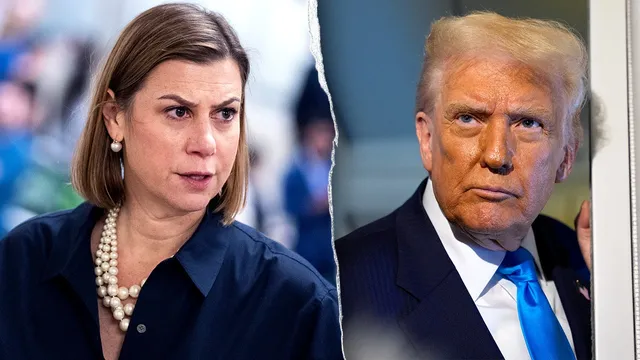
Senator admits uncertainty over Trump’s military orders legality
Senator admits uncertainty over Trump’s military orders legality
- Senator Elissa Slotkin emphasized her lack of awareness regarding any illegal orders from President Trump.
- She highlighted concerns over the legal complexities of military actions in the Caribbean and Venezuela.
- The situation reflects ongoing tensions between military responsibilities and political orders in the U.S.
Story
In the United States, a controversial video featuring Michigan Senator Elissa Slotkin and five other Democratic lawmakers has sparked significant backlash. The video, posted on social media, encourages military and intelligence personnel to refuse illegal orders, raising concerns about potential illegal directives issued by President Donald Trump. During an interview on ABC's 'This Week', Slotkin was directly questioned about whether she believed Trump had issued any illegal orders. In her response, she stated that to her knowledge, she was 'not aware' of any illegal orders but identified complex legal issues surrounding U.S. military actions in Venezuela and the Caribbean. The video and its implications have drawn criticism from various conservative commentators and political figures. They argue that the statements made by the lawmakers suggest a call to defy presidential authority, which has been labeled as an act of sedition by some. The situation is further complicated by the political tensions in the country, as law enforcement confronts intense public scrutiny and stress due to recent events. The video's release aimed to provide reassurance to service members regarding their duty to the Constitution and the rule of law during turbulent times. It has been viewed over five million times within 24 hours and sparked debates about the responsibility of military personnel to uphold constitutional rights amidst orders they may question.
Context
The legality of military orders issued by former President Donald Trump has been a topic of extensive debate and analysis, particularly in the context of the balance of powers between the executive and legislative branches of the U.S. government. Trump’s tenure was marked by various unexpected military directives, which raised questions regarding their adherence to both domestic and international law. Numerous legal experts have scrutinized the implications of these orders, especially instances where military intervention was suggested without explicit congressional approval, which is a cornerstone of the War Powers Resolution of 1973. This analysis aims to distill the core legal arguments surrounding these military orders and assess their compliance with established legal frameworks. One significant aspect of this analysis is the constitutional authority granted to the President as the Commander-in-Chief of the Armed Forces versus Congress's authority to declare war. The Constitution provides Presidents with substantial leeway to take military action, particularly in response to imminent threats to national security. However, Trump's military orders often sparked public and legal backlash due to their perceived potential overreach and lack of clear, articulated threats. Experts argue that the interpretation of what constitutes an 'imminent threat' can vary, further complicating assessments of legality. This ambiguity raises critical questions about the limits of executive power and the fundamental principles of checks and balances within the U.S. governance framework. In several instances, Trump's military decisions involved preemptive strikes or interventions in foreign conflicts, prompting discussions about their legality under the international law framework as well. The United Nations Charter, for instance, emphasizes the sovereignty of nations and the need for collective security measures, where unilateral military action can be construed as violations of international law unless justifiable under specific circumstances, such as self-defense. Legal analysts have noted how Trump's approach to military orders often leaned toward unilateral action, which, while strategically beneficial in some contexts, could set concerning precedents regarding the sanctity of international law norms. Ultimately, the evaluation of the legality of Trump’s military orders entails a multifaceted approach that intertwines constitutional law, international law, and public policy implications. Legal scholars and advocates have consistently emphasized the necessity for clearer legislative frameworks to govern military engagements to safeguard democracy and prevent the erosion of civil liberties that can occur during expansive military actions. Going forward, it is crucial for both the legislative and executive branches to engage in a robust dialogue that reinforces the rule of law and upholds democratic accountability.


