

Michael Jordan challenges NASCAR's monopoly in court
Michael Jordan challenges NASCAR's monopoly in court
- Michael Jordan testified in a federal antitrust case regarding NASCAR's management.
- He stated that power is held by those not risking their lives, calling for reforms.
- Jordan's testimony advocates for a partnership model for NASCAR to ensure fair conditions for drivers.
Story
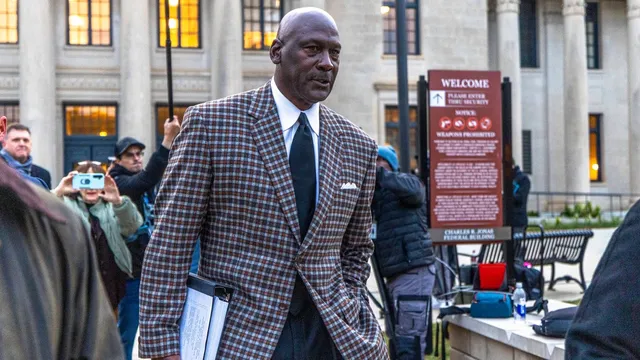
In Charlotte, North Carolina, basketball legend Michael Jordan testified in a federal antitrust case against NASCAR, asserting that the organization's management structure is detrimental to its teams and drivers. He described a system where power and finances are concentrated in the hands of non-participants, thereby putting drivers at risk without adequate protections. Jordan, a co-owner of 23XI Racing, emphasized the need for a partnership model similar to the NBA's, arguing this could lead to healthier growth for the sport. During the proceedings, Heather Gibbs, chief operating officer of Joe Gibbs Racing, supported Jordan's assertions, indicating that the charter agreement for NASCAR teams was a coercive, “take-it-or-leave-it” situation, devoid of bargaining power. Gibbs illustrated the financial unpredictability that can arise for teams, revealing that even storied organizations like hers can experience fluctuating profits. Jordan highlighted the lack of insurance and union protections available to NASCAR drivers, stressing the perilous nature of their participation in races. Additionally, one of NASCAR’s attorneys acknowledged the celebrity status of Jordan, hinting at the unusual atmosphere of the court proceedings, where a mix of cordiality and serious allegations was present. Despite the tension surrounding the case, the interactions displayed between Jordan and the attorneys were amicable, showcasing mutual respect. The testimony underscored a broader discussion of fairness and representation in motorsports, questioning whether the current structure adequately protects those who risk their lives on the racetrack and what reforms may be necessary to foster a more equitable environment. Overall, the lawsuit sheds light on the competitive landscape of NASCAR and calls into question the legitimacy of its operational practices, prompting potential future changes in management structure and team-owner relations, inspired by models from other professional leagues that prioritize partnerships and shared responsibilities.


