

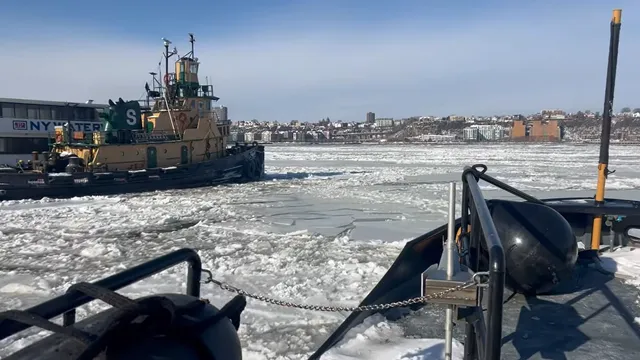
U.S. Coast Guard aids navigation through frozen waterways
U.S. Coast Guard aids navigation through frozen waterways
- The U.S. Coast Guard is conducting icebreaking operations to ensure safe navigation in icy waters.
- Severe winter conditions and a historic storm have led to significant freezing of waterways.
- These efforts are critical for maintaining commerce and public transportation during harsh winter weather.
Story
In the United States, particularly within the Northern Tier regions, the U.S. Coast Guard has undertaken extensive icebreaking operations to facilitate the safe passage of ships through icy waters. This initiative has become particularly pressing amid severe winter conditions, which have led to significant freezing of waterways critical for transportation and commerce. Ice formation has been reported across major regions affected by an accompanying historic winter storm that swept through the area, resulting in temperatures plummeting to life-threatening levels. As a result, more than 220 million people nationwide experienced below-average temperatures, exacerbating already challenging winter conditions. On January 25, 2026, the Coast Guard Cutter Mackinaw played a key role in freeing a 650-foot motor vessel, Algoma Intrepid, in Lake Michigan by clearing ice obstructing its path. Similarly, on January 28, 2026, the Coast Guard Cutter Bristol undertook ice removal efforts on Lake Erie to support ongoing commercial activities and essential goods deliveries, showcasing the unwavering commitment of the Coast Guard to maintain navigable waterways for public utility and commercial traffic during harsh weather emergencies. Captain Jonathan Andrechik, the commander of Coast Guard Sector New York, emphasized the significance of these operations in ensuring safe navigation and continuity of essential services like winter fuel delivery and public transportation amid freezing temperatures. The Coast Guard teams have mobilized their resources to work around the clock, prioritizing safety amidst the operational challenges posed by the heavy snow and ice accumulation. Historically, ice management in the Great Lakes has been a critical mission for the U.S. Coast Guard, aimed at ensuring that ice does not hinder the movement of shipping vessels, which is vital for commerce in the region. This year, ice formation is observed to be trending above average, particularly affecting Lake Michigan and Lake Erie. As the U.S. grapples with adverse winter conditions, the role of the Coast Guard becomes even more pivotal in safeguarding waterway navigation and facilitating uninterrupted trade, showcasing their essential function during extreme weather events.
Context
Winter storms significantly impact navigation in the Northeast U.S., presenting unique challenges for maritime and air transport. These storms often bring heavy snowfall, strong winds, and ice, leading to reduced visibility, dangerous ice conditions, and increased risk of accidents. Navigation systems and routes can become obstructed, resulting in delays and detours. For vessels operating in harbors and along coastlines, accumulating ice can hinder movement, making safe docking and undocking crucial. Furthermore, the maritime traffic control systems must adapt swiftly to changing conditions during such storms to ensure safety and efficiency in navigation. The effects of winter storms extend beyond immediate safety concerns; they can also disrupt economic activities related to transportation. Ports in the Northeast U.S. are vital for trade and commerce, and when winter storms hit, operations can be halted, affecting supply chains both locally and nationally. Delays in the delivery of goods and services can lead to increased costs for businesses and consumers. Additionally, industries reliant on shipping, such as fisheries and tourism, may face significant operational interruptions, propelling further economic implications. Stakeholders must prepare for these disruptions by employing advanced technologies for forecasting and navigating storm events more effectively. Air navigation, too, is severely impacted during winter storms in the Northeast. The combination of snow, freezing rain, and high winds can cause flight cancellations, delays, and diversions as airlines prioritize passenger safety amid challenging weather conditions. Airports may experience temporary closures or reduced operational capacity, creating a ripple effect that affects not only regional travel but also connections to international destinations. Coordination among air traffic control and airline operations teams is essential to manage these disruptions and ensure efficient rerouting of air traffic during adverse weather conditions. In conclusion, the impact of winter storms on navigation in the Northeast U.S. is multifaceted, affecting maritime and aerial transport systems. The challenges posed by these storms necessitate continuous updates in navigation strategies and infrastructure improvements. Collaborative efforts among governmental agencies, transportation authorities, and private sectors are essential to mitigate risks associated with winter storms. Proactive measures, such as enhanced weather monitoring and contingency planning, will be instrumental in maintaining navigational safety and reliability throughout the winter months.


