

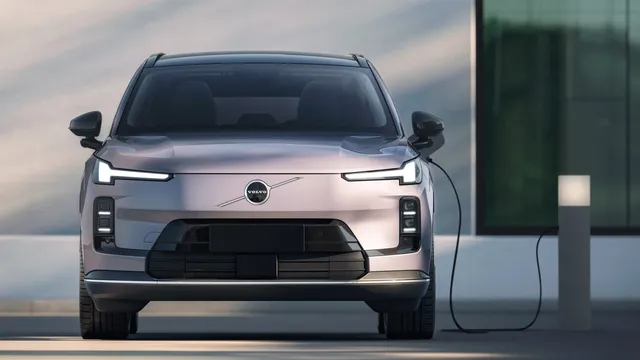
Volvo confirms continued development of plug-in hybrids with Geely
Volvo confirms continued development of plug-in hybrids with Geely
- Volvo CEO Hakan Samuelsson announced that the XC60 will remain in production alongside the newly launched EX60.
- The company plans to develop additional plug-in hybrid models in collaboration with its parent company, Geely.
- This strategic direction aims to address customer demand for hybrids while aligning with Volvo's goal of increasing the electric vehicle lineup.
Story
In Stockholm, Volvo CEO Hakan Samuelsson announced that the XC60 SUV will remain in production despite the recent launch of the all-electric EX60 model. The decision highlights the company's strategy to bridge the transition from conventional vehicles to all-electric models, ensuring ongoing production of a popular vehicle while new technologies are being developed. Samuelsson stated that the XC60 would see improvements and a facelift in its current generation, illustrating the company's commitment to offering options for consumers who prefer plug-in hybrids alongside its electric lineup. The SPA3 platform utilized by the EX60 is designed to be cost-effective and allows Volvo to maintain margin parity, enabling flexibility for consumers. Samuelsson emphasized the brand's focus on all-electric vehicles while continuing to cater to customer demand for hybrid models. The development of new plug-in hybrids will involve collaboration with Geely to manage costs effectively, as it would be prohibitively expensive to create new vehicles from the ground up. The XC70 model, which was co-developed with Geely, serves as a precedent for future hybrid models. Additionally, Samuelsson hinted at an evolution in plug-in hybrid technology, focusing on integrating hybrid capabilities into electric vehicle designs rather than simply adding smaller batteries to conventional structures. The shift demonstrates Volvo's efforts to innovate within its hybrid offerings while aligning with the broader industry shift towards sustainable and electric transportation solutions. The company aims to streamline development processes to simultaneously advance two parallel technologies without compromising efficiency or escalating costs. Ultimately, Volvo's approach reflects a balance between tradition and innovation, ensuring existing customers are accounted for while preparing for a more electrified and environmentally friendly future. This commitment to continuous improvement in both hybrid and electric segments signifies a strategic effort to adapt to changing market demands and reinforce Volvo's position in the automotive industry.


