

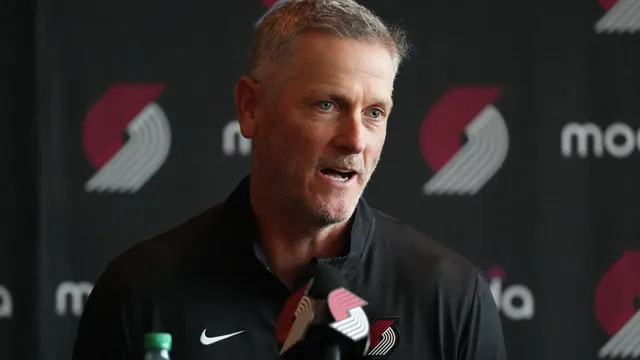
Tom Dundon implements budget cuts for Blazers outside the locker room
Tom Dundon implements budget cuts for Blazers outside the locker room
- Tom Dundon, the new owner of the Blazers, implemented strict cost-saving measures for the team as they entered the playoffs.
- The Blazers are the only playoff team not traveling their two-way players to save on expenses.
- Dundon's approach marks a significant shift in company culture and raises questions about its long-term impact on the team.
Story
In the NBA, the Portland Trail Blazers, under new owner Tom Dundon, have adopted a notably frugal approach that has raised eyebrows throughout the league. Since Dundon took ownership, numerous cost-cutting measures have been implemented, profoundly affecting the team’s operations. For example, all members of the traveling party, except for players and coaches, were instructed to check out of their hotel at 12:30 p.m. to avoid late-checkout fees during the playoffs, emphasizing Dundon’s commitment to budget-consciousness. This new management style sharply contrasts with the previous ownership under Paul Allen, one of the wealthiest individuals in the world. Under Allen's leadership, the team enjoyed a more lavishly funded operation, leaving players and staff accustomed to more lenient financial practices. Dundon’s frugal tactics have startled long-time fans and analysts, who are witnessing a culture shift where financial considerations are prioritized even before critical games. The Blazers notably did not travel with their two-way players for the playoffs, a decision made to save on accommodations and meals. Despite reactions to his cost-cutting strategies, Dundon appears unfazed, valuing winning over public opinion. League sources have highlighted that he is unapologetic about his decisions, focusing solely on what he believes will enhance the team's competitiveness. Dundon’s approach has drawn comparisons to his experiences in the NHL, where he confronted financial adversity and prioritized team performance. As he assimilates to the NBA environment, Dundon insists on maintaining focus on factors that directly impact player success while disregarding broader managerial norms that have long been accepted. While Dundon seeks to enhance the team’s competitive edge, the long-term repercussions of his austerity measures remain to be seen. Current and former league insiders suggest that if his ownership continues along this course, it will undoubtedly provoke further discussions on team expenditures and operational practices within the NBA. Observers will be keen to see how Dundon's strategies will ultimately translate into wins on the court and how they will affect player morale and recruitment moving forward.


