

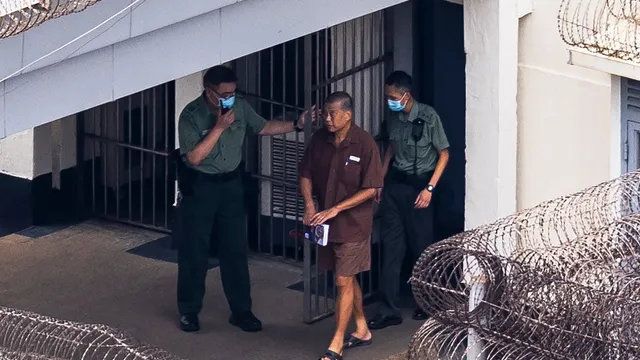
Jimmy Lai refuses to appeal 20-year sentence under national security law
Jimmy Lai refuses to appeal 20-year sentence under national security law
- Jimmy Lai was sentenced to 20 years for sedition and collusion under Hong Kong's national security law.
- He has chosen not to appeal this conviction, ending a lengthy legal battle.
- His sentencing highlights concerns about declining freedoms in Hong Kong and the implications for pro-democracy activists.
Story
In Hong Kong, Jimmy Lai, a prominent pro-democracy figure and founder of the Apple Daily newspaper, was sentenced to 20 years in prison under the national security law in December. This conviction stemmed from charges of conspiracy to collude with foreign forces and conspiracy to publish seditious material. Lai, now 78 years old, had become a symbolic figure in the struggle for democracy in the region and his sentencing has raised significant international concern about the state of human rights and press freedom in Hong Kong. His legal team recently announced that he would not appeal the conviction, a decision that has drawn various reactions, including disappointment from human rights advocates. Observers suggest that this decision reflects his acceptance of the harsh realities of the legal and political system in Hong Kong, especially since the national security law has been criticized for stifling dissent and freedom of expression. Lai's conviction is viewed as part of a broader crackdown on pro-democracy activism and media freedom since the law's implementation. Lai's sentencing is reportedly one of the heaviest penalties assigned under this controversial law, leading his family and supporters to express fear that he may spend the rest of his life in prison. Reports indicate that Lai's health condition has deteriorated, raising concerns amid claims of inadequate conditions in detention. His family, including his son Sebastien, has characterized the trial as politically motivated, arguing that the charges against him were aimed at silencing a critic of the Chinese government. This situation has prompted statements from international figures, including calls for his release on humanitarian grounds. As global attention turns to Hong Kong's human rights landscape, Lai's case serves as a litmus test for international responses to Beijing’s increasing control over the semi-autonomous region. Diplomatic engagements and inquiries from international leaders, including remarks from U.K. officials, underscore the pressing nature of this case. Many argue that the international community must take stronger stances against the repression of fundamental freedoms in Hong Kong to prevent further deterioration of civil liberties in the region.
Context
The impact of the National Security Law (NSL) on press freedom in Hong Kong has been profound and noteworthy. Enacted on June 30, 2020, the law was described by the Chinese government as a measure to ensure national security following years of political unrest and pro-democracy protests in the region. However, critics argue that the law has rapidly eroded the liberties that have traditionally characterized the media landscape in Hong Kong, including the right to free expression and the independence of the press. The law criminalizes acts of secession, subversion, terrorism, and collusion with foreign forces, with vague definitions that have led to significant self-censorship among journalists and media organizations, effectively stifling dissenting voices and critical reporting against the government. In the aftermath of the law's passage, numerous media outlets have faced considerable pressure from authorities. Prominent examples include the closure of the pro-democracy publication Apple Daily in June 2021, following a police raid and the arrest of its founder, Jimmy Lai. This incident sent a chilling signal to other media entities operating in Hong Kong, prompting them to reconsider their editorial choices and coverage of sensitive topics. Moreover, the exodus of journalists from the region has increased, with many relocating due to fears of legal repercussions and the ever-diminishing space for press freedom. Such an environment fosters a culture of fear, where journalists are wary of potential implications for their personal and professional lives if they take a stand against government narratives. Internationally, the NSL has drawn condemnation and concern, as organizations such as Reporters Without Borders and the Committee to Protect Journalists have pointed to the dramatic decline in press freedoms within Hong Kong. In various global reports, Hong Kong’s ranking in terms of press freedom has plummeted dramatically, positioning it among the world’s most restricted regions for media freedom. Countries and institutions have responded with sanctions and calls for accountability, emphasizing the need to protect the rights of journalists and promote press freedom as a crucial element of democracy. However, the effectiveness of these condemnations remains debatable, given the realities on the ground in Hong Kong. The long-term consequences of the NSL on press freedom in Hong Kong may continue to extend beyond just immediate impacts on media operations. The consolidation of control over media and narratives poses a significant threat to democratic principles and the civic space essential for a vibrant society. With increasingly restrictive measures likely to follow, the future of journalism in Hong Kong hangs in a delicate balance, raising critical questions about civil liberties, human rights, and the implications for the broader geopolitical landscape in the region. The NSL represents a pivotal turning point that may reshape the role of the media in Hong Kong, compelling journalists and news organizations to navigate an increasingly perilous terrain in pursuit of truth and accountability.


