

Iran's Revolutionary Guard fires back at US military in escalating conflict
Iran's Revolutionary Guard fires back at US military in escalating conflict
- Iran's Revolutionary Guard launched counterattacks against U.S. military installations in response to strikes.
- These developments occurred amid heightened tensions following Iran's crackdown on protests and international warning signs.
- The escalating situation highlights the volatile geopolitical landscape of the Middle East.
Story
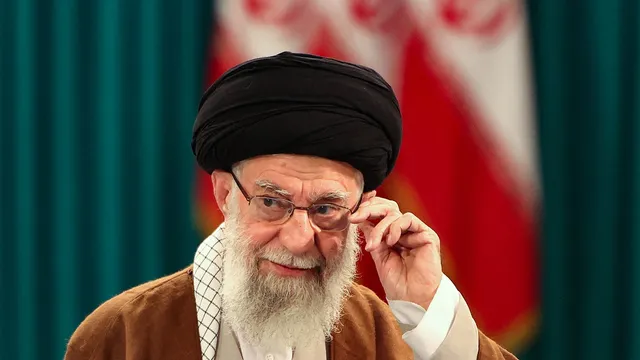
On February 28, 2026, amid escalating tensions, Iran's Revolutionary Guard initiated counterattacks against U.S. military installations located in Bahrain, Kuwait, and Qatar. This direct action followed a series of strikes that targeted areas near the offices of Supreme Leader Ayatollah Ali Khamenei, which were part of broader U.S. operations aimed at crippling Iran's military capabilities. The backdrop of these events includes a long history of strained relations between Iran and the United States, particularly following the crackdown on Iranian protesters. In recent years, particularly after the death of Mahsa Amini in 2022, Iran has faced widespread unrest, showcasing deep-rooted dissatisfaction with clerical leadership and systemic corruption. These protests have been met with harsh government responses, sparking further international tensions. The geopolitical landscape has further complicated matters, as Iran's influence in the region has grown significantly since Khamenei ascended to power in 1989. His administration has supported various groups, including Hezbollah and Hamas, which has led to an extended conflict with Israel and its allies. The U.S. has perceived Iran as a principal threat in the region, leading to increased military engagements, sanctions, and diplomatic isolation for Tehran. In recent months, Israeli military operations against Iranian affiliates in Gaza have intensified, prompting Iranian leaders to announce their readiness for war in retaliation against perceived aggressions. The firing of drones and missiles as retaliation demonstrates the heightened state of military readiness and willingness to respond with force in the wake of U.S. and Israeli military activities. This cycle of violence and retaliation highlights the unstable nature of Middle Eastern geopolitics, where Iranian actions are viewed within the context of broader regional conflicts, including its support for various militant groups. As Iran seeks to defend its sovereignty against foreign intervention, the likelihood of further military conflicts increases, underscoring the need for both sides to reassess their strategies. The long-standing ideological battle has persisted behind a façade of diplomacy, revealing the volatile nature of peace negotiations and the futility of sanctions in fostering genuine dialogue. Ultimately, the situation skews towards potential escalation as both Iranian and U.S. forces remain on high alert, prepared for possible repercussions. The consequences of this ongoing struggle will not only impact Iran and the U.S. but may also affect regional stability for neighboring countries caught in the crossfire of this age-old conflict.
Context
The history of military conflicts between the United States and Iran dates back to the early 20th century, but gained significant attention after the Iranian Revolution in 1979. Following the overthrow of the Shah, who was supported by the U.S., Iran became an Islamic Republic under Ayatollah Khomeini. This transformation led to the severing of diplomatic ties and the beginning of hostilities, most notably exemplified by the Iran Hostage Crisis where 52 American diplomats and citizens were held hostage for 444 days, creating a profound impact on U.S.-Iran relations and cementing mutual animosity. During the 1980s, the Iran-Iraq War created a backdrop for indirect U.S. involvement, as the U.S. supported Iraq under Saddam Hussein in various capacities, further complicating the geopolitical landscape in the region. The situation escalated dramatically in the 1990s with the Gulf War, leading to the U.S. maintaining a military presence in the Persian Gulf to counter perceived Iranian aggression. In the following years, tensions persisted with clashes over shipping routes, particularly in the Strait of Hormuz, which is vital for global oil transportation. The situation intensified again in the early 2000s with the U.S. invasion of Iraq in 2003, which opened up power vacuums in the region that Iran sought to fill, leading to accusations of Iran supporting militia groups opposing U.S. forces. This narrative of Iran as a destabilizing force in the Middle East was propagated by various U.S. administrations throughout the decades that followed. By the mid-2000s, the focus shifted to Iran's nuclear program, which the U.S. and its allies viewed as a direct threat. The lack of transparency around Iran's nuclear ambitions led to the imposition of economic sanctions by the U.S. and the UN, aiming at curbing its nuclear capabilities. The culmination of this diplomatic effort was the Joint Comprehensive Plan of Action (JCPOA) agreed upon in 2015, an agreement that sought to limit Iran's nuclear program in exchange for relief from sanctions. While initially heralded as a breakthrough in U.S.-Iran relations, the unilateral withdrawal of the U.S. from the agreement in 2018 under the Trump administration reignited tensions. Since then, U.S.-Iran relations have been characterized by a series of aggressive actions and retaliatory maneuvers. The assassination of Iranian General Qasem Soleimani in January 2020 marked a significant escalation, leading to retaliatory missile strikes on U.S. bases in Iraq by Iran. Despite moments of heightened tensions, both nations have engaged in various rounds of indirect talks and negotiations seeking to revive some form of a nuclear agreement. The historical military conflicts and ongoing hostile relations are reflective of broader geopolitical strategies, national security considerations, and regional power dynamics, underscoring the complexities that continue to shape U.S. and Iran's military and diplomatic engagements.


