

Poland steps up to provide medical aid to Swiss fire victims
Poland steps up to provide medical aid to Swiss fire victims
- On January 2, 2026, Poland offered specialized medical care to victims of a ski resort fire in Switzerland.
- The fire, which occurred at a New Year’s celebration, resulted in 40 deaths and 115 injuries.
- Poland's offer included ICU beds and air transport for 14 injured victims as a demonstration of solidarity.
Story
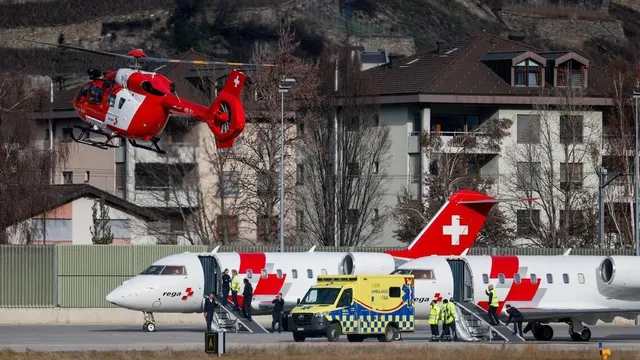
On January 2, 2026, Poland announced that it would provide specialized medical care for victims of a devastating fire that occurred at a ski resort in Switzerland. The incident took place during a New Year's celebration at a bar in the luxury ski resort town of Crans-Montana, resulting in approximately 40 fatalities and around 115 injuries. The Swiss healthcare system faced overwhelming demand as emergency units in local hospitals became filled, leading to the urgent transfer of patients to neighboring countries, including Germany, Italy, and France. The Polish government, led by Prime Minister Donald Tusk, expressed solidarity with Switzerland and formally offered to assist with the treatment of 14 individuals who sustained injuries from the fire. This offer included the provision of four intensive care unit (ICU) beds and ten additional beds for those with less severe injuries. The specialized treatment facilities are located at the Siemianowice Slaskie hospital in Poland, renowned for its expertise in treating burns and chronic wounds. To facilitate the transfer of the injured, Poland proposed sending two medics to assist and organize air transport for the victims to the Polish hospital. The swift response from Poland highlights the importance of international cooperation in times of crisis and the solidarity demonstrated between countries during humanitarian emergencies. This situation underscores the challenges faced by healthcare systems in handling mass casualty events and the necessity for regional support agreements. As news of the fire and the subsequent Polish offer spread, it was expected to bolster relationships between the two nations and emphasize the significance of medical collaborations in emergencies. The assistance proposal from Poland not only reflects a compassionate response to a tragic event but also serves as a practical solution to mitigate the burden on the Swiss healthcare system as they deal with the aftermath of this disaster.
Context
Poland's healthcare system has evolved significantly over the past decades to effectively respond to international emergencies. This evolution has been driven by a combination of domestic needs and the influence of global health trends. The Polish government has recognized that local preparedness and resilience are crucial, particularly given the increasing frequency and severity of global crises, such as pandemics, natural disasters, and humanitarian emergencies. Poland has sought to integrate its healthcare response strategies with international frameworks, aligning with the World Health Organization and other global health entities to improve its preparedness and response capabilities. One of the primary components of Poland's healthcare response is its robust emergency management system, which involves collaboration between various sectors, including health, social services, and law enforcement. This system has established clear protocols for mobilizing resources and personnel during emergencies. Regular drills and training exercises are conducted to ensure healthcare workers and responders are prepared to act swiftly and effectively in crisis situations. Poland also invests in continuous education and training for its healthcare professionals to keep them updated on best practices in emergency care, biosecurity, and crisis management. Moreover, Poland's healthcare system leverages technology in its approach to managing health emergencies. Digital health tools, such as telemedicine and health information systems, have become essential in facilitating communication and resource management during international emergencies. These technologies not only enhance the capacity of healthcare providers to offer timely services but also enable better tracking of health trends and patient outcomes during crises. Poland also focuses on building partnerships with international organizations to improve its response capabilities further and share knowledge and resources during emergencies. In conclusion, Poland’s healthcare response to international emergencies is characterized by a proactive and integrated approach, emphasizing preparedness, training, and the use of technology. By aligning its strategies with global standards, conducting regular training, and investing in health innovations, Poland aims to maintain a resilient healthcare system capable of addressing both domestic and international health threats. The continuous improvement of these systems will be crucial as the world faces more complex health challenges in the future.


