

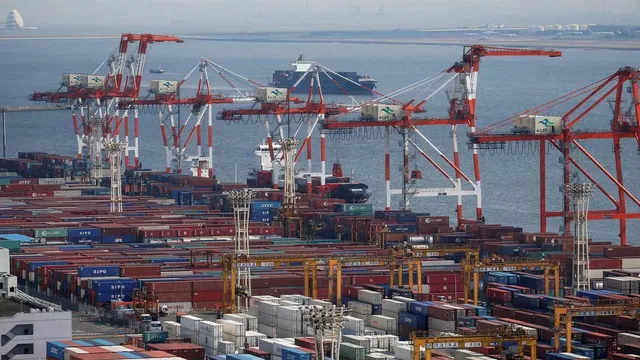
Japan's exports surge due to pre-Chinese New Year demand
Japan's exports surge due to pre-Chinese New Year demand
- Japan's exports rose 16.8 percent in January 2026 driven by demand before the Chinese New Year.
- Meanwhile, imports fell 2.5 percent, causing a lower than expected trade deficit.
- Economic experts predict potential pullback in February but modest growth if conditions improve.
Story
Japan experienced a significant increase in exports during January 2026, marking the largest growth in over three years. The surge is attributed to strong demand from Asian countries ahead of the Chinese New Year, with exports to China notably jumping by 32 percent. While this positive trend reflects robust international trade activity, it has also been suggested that the increase may be temporarily driven by seasonal factors. Expert Takeshi Minami from Norinchukin Research Institute highlighted that a potential pullback in February could be anticipated, potentially exceeding previous expectations. Despite this, January marks the fifth consecutive month of export growth compared to late 2025. In addition to exports, Japan saw overall trade dynamics shift as imports decreased by 2.5 percent year-on-year, which contrasts with market expectations of a 3 percent uptick. This shift led to Japan recording a trade deficit of 1.15 trillion yen in January, which is narrower than forecasts suggesting a 2.14 trillion yen deficit. Analysts noted that the impact of U.S. tariffs has had lasting effects on Japan's trade balance, particularly after a slow down in Q4 2025 as a result of lower-than-anticipated exports and capital investments. Looking at the broader economic outlook, experts remain cautious. The expectation is that while Japan's economy could see some recovery, it will hinge significantly on domestic factors like private consumption and wage growth. As prices continue to rise, easing consumer frugality will be necessary to maintain growth momentum, with hope resting on inflation reducing and households adapting to the changing economic environment. Overall, the export growth in January showcases Japan's adaptive trade environment amidst external challenges. However, the fragility of momentum, influenced by temporary factors and global tariff impacts, calls for a vigilant approach towards future projections of the Japanese economy.


