
politics
controversial
impactful

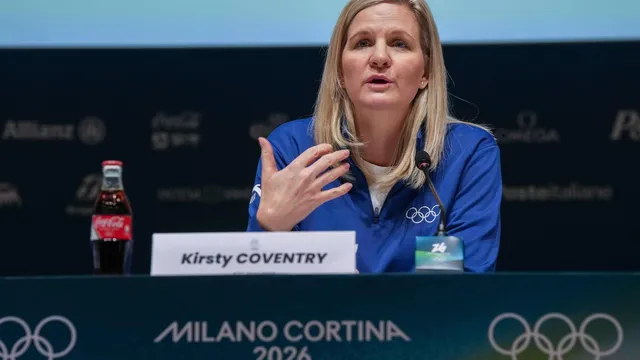
IOC president Kirsty Coventry calls distractions from Winter Olympics sad

Feb 1, 2026, 3:45 PM50
(Update: Feb 5, 2026, 2:00 AM)
Zimbabwean swimmer
country primarily in North America

IOC president Kirsty Coventry calls distractions from Winter Olympics sad

  • Kirsty Coventry discussed media distractions affecting the Milan Cortina Olympics.
  • The presence of ICE agents and the release of Epstein files have drawn significant attention.
  • Coventry expressed hope that the Olympic spirit will prevail once the events begin.
Share your opinion
5

Story

In early February 2026, the International Olympic Committee President Kirsty Coventry attended a press conference in Milan, Italy, just days before the opening ceremony of the Milan Cortina Winter Olympics, which are set to run from February 6-22. The event has been overshadowed by controversies regarding the presence of U.S. Immigration and Customs Enforcement (ICE) agents and recently released files related to Jeffrey Epstein, causing significant media focus on these issues rather than the Olympics themselves. Coventry expressed her disappointment about these distractions, emphasizing that the IOC has recognized such occurrences leading up to major games over the years, referencing prior events marked by external issues like the Zika virus and COVID-19. She maintained her belief that once the competition begins, the magic and spirit of the Olympics will reignite the public's enthusiasm, drawing attention back to the athletes and their achievements. Even amidst protests, Coventry reiterated that the focus remains on the athletes competing in the Games, allowing the public to experience the value and joy the Olympics can bring. However, detractors have noted a lack of Olympic spirit in the atmosphere surrounding the events, which are geographically spread out, contributing to a sense of disconnection among athletes and fans. Critics argue that such distractions dilute the essence of the Games and point out how the ongoing geopolitical issues further complicate the narrative surrounding the Olympics.

Context

The Olympic Games, renowned for their athletic excellence and global spirit, have been at the center of numerous controversies since their modern inception in 1896. These controversies often stem from political, social, and economic dynamics, showcasing the complex interplay between sports and broader societal issues. Throughout history, the Olympics have been affected by boycotts, political protests, issues of gender and racial equality, doping scandals, and even terrorism. For instance, the 1936 Berlin Games were marred by Adolf Hitler's use of the event to promote Nazi propaganda, while the 1980 and 1984 Games witnessed significant boycotts by the United States and the Soviet Union, respectively, highlighting Cold War tensions. These incidents underscore how the Olympics can transcend the realm of sports to become a platform for geopolitical statements and movements. One of the most persistent issues has been the question of doping and performance-enhancing drugs. The Olympic movement has faced a continual battle against doping, particularly during the 1990s and 2000s, with numerous athletes stripped of medals and sports organizations facing criticism over their handling of drug policies. The introduction of stringent anti-doping measures, including the World Anti-Doping Agency, reflects an ongoing commitment to maintaining the integrity of the Games. However, the issue remains a divisive one, often overshadowing the achievements of athletes and casting a pall over competition. Scandals such as the Russian doping controversy surrounding the 2014 Sochi Winter Olympics have raised serious questions about national involvement in systemic cheating, leading to discussions on reform within the Olympic governance structure. Moreover, the Olympics have become a site for discussing issues of social justice and representation. For example, the protests by athletes during the 1968 Mexico City Games, where Tommie Smith and John Carlos raised their fists in a Black Power salute, highlighted the struggle for civil rights and racial equality in the United States. More recently, athletes have advocated for gender equity, LGBTQ+ rights, and mental health awareness, sparking dialogues both within and outside the Olympic community. These movements signify a shift in how athletes view their roles and responsibilities, moving beyond mere competitors to advocates for change. The involvement of athletes in social movements has reshaped public perceptions of the Olympics, making them more than just a display of physical prowess. Additionally, the economic implications of hosting the Olympics have raised significant concerns. The enormous costs associated with building infrastructure, accommodating athletes, and managing security have led to debates about the sustainability of such investments, especially when budgets often escalate beyond initial projections. Cities like Athens in 2004 and Rio de Janeiro in 2016 have faced severe economic repercussions post-Games, sparking discussions on the long-term impact of hosting the Olympics on local communities. The debate over whether the benefits of increased tourism and global attention to a host city justify the expenditures continues alongside growing calls for reform to make the Games more sustainable and inclusive. Thus, the controversies surrounding the Olympics reflect broader societal issues, revealing the intricate links between sport, politics, and community welfare.

2026 All rights reserved
