

Measles outbreak linked to national rally raises health concerns
Measles outbreak linked to national rally raises health concerns
- Health officials reported multiple confirmed measles cases linked to events in Washington, D.C.
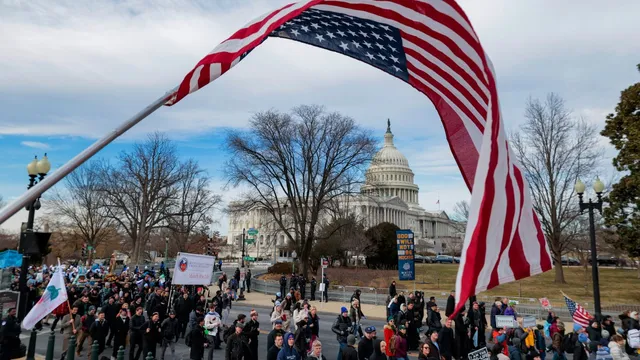
- The National March for Life Rally on January 23 was a significant exposure site.
- Individuals exposed at these events are advised to monitor for symptoms and seek medical care.
Story
Recently, health officials in Washington, D.C. reported several confirmed cases of measles amid concerns for public health safety. These cases were linked to multiple locations visited by infected individuals while they were contagious. Notably, the National March for Life Rally and Concert was among the events where potential exposure occurred. This rally took place on January 23, 2026, from 11 a.m. to 5 p.m., drawing significant crowds, which raises fears about the disease's rapid transmission in crowded settings. The incident has prompted DC Health to issue warnings about the risks associated with measles exposure, particularly for unvaccinated attendees. The health department has identified various exposure sites, including the Basilica of the National Shrine of the Immaculate Conception and several locations at Catholic University of America on January 24 and 25. Additionally, public transit users faced possible exposure on Metro lines and at significant public transport hubs like Ronald Reagan Washington National Airport, again reinforcing the contagious nature of measles. The Centers for Disease Control and Prevention (CDC) notes that the measles virus is incredibly contagious, infecting around 90% of unvaccinated individuals who come into contact with it, further escalating the potential for community transmission. As a preventive measure, health officials advised anyone who attended these events to monitor themselves for symptoms, which typically appear 7 to 14 days post-exposure. Initial symptoms include high fever, cough, runny nose, and conjunctivitis, followed by a telltale rash. The public is urged to contact healthcare providers immediately upon noticing any symptoms, particularly for those who are unvaccinated or have received only one dose of the measles-containing vaccine. Vaccination is emphasized as a key defense to limit the outbreak's spread. The response from DC Health outlines the necessary steps to mitigate further transmission. Individuals at risk of measles are told to confirm their immunization status and seek medical advice if they experience any symptoms. With multiple recent events fostering close contact among individuals, the outbreak underscores the critical need for vaccination and public health vigilance to protect community health and safety against this preventable disease.


