

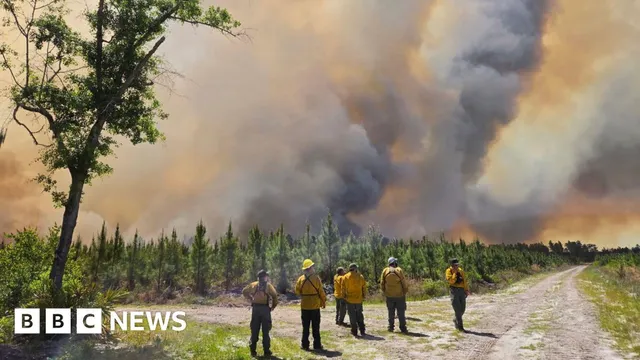
Severe drought fuels wildfires destroying homes in Georgia
Severe drought fuels wildfires destroying homes in Georgia
- Severe drought conditions in Georgia and northern Florida have fueled rapid wildfire spread, forcing hundreds to evacuate.
- The Georgia government has declared a state of emergency and imposed a historic burn ban across multiple counties.
- The current wildfire crisis highlights the urgent need for public awareness and preparedness in affected areas.
Story
In the United States, specifically in Georgia and northern Florida, severe drought conditions have led to significant wildfire activity in April 2026. Wildfires have been rapidly spreading, fueled by low humidity and strong winds, prompting emergency declarations in multiple counties. As of April 23, authorities reported that more than 50 homes had been destroyed, and hundreds of residents were forced to evacuate. Smoke from these fires has drifted into neighboring states, causing air quality concerns in areas such as South Carolina and affecting daily activities for residents. Furthermore, the Georgia Department of Defense was mobilized to assist in recovery efforts, as Governor Brian Kemp declared a state of emergency for 91 counties across the state, highlighting the unprecedented scale of this wildfire crisis in the region. The Ga. Forestry Commission has implemented mandatory burn bans for yard debris and agricultural burning, indicating the seriousness of the situation, which is exacerbated by significantly lower than normal rainfall since September. Georgia's communities were ill-prepared for such destructive fires this early in the year, revealing a critical need for public awareness and emergency preparedness. Meteorologists have warned of the potential for further fire outbreaks as conditions are expected to remain dry and windy. Recent forecasts indicated an alarming trend of high fire risks across the southeastern region, with drought conditions affecting the vegetation and soil moisture levels. Reports show that, as of mid-April, nearly 94% of the Southeast was experiencing severe to exceptional drought, which allowed the fires to spread uncontrollably and made containment efforts challenging for firefighting crews. Moreover, the situation has been worsened due to multiple incidents of new wildfires igniting almost daily, complicating response efforts and leading to increased air pollution due to wildfire smoke, which has raised environmental and health concerns. The current circumstances suggest that without significant rainfall, this wildfire crisis could extend for weeks, keeping firefighters, emergency officials, and residents on high alert as they brace for a prolonged wildfire season in Georgia.
Context
Drought is a climatic phenomenon characterized by prolonged periods of below-average precipitation, leading to water shortages that have significant impacts on the environment, agriculture, and ecosystems. In the Southeast region of the United States, drought conditions create a critical nexus with wildfire occurrences, heightening the risks and intensifying the effect of wildfires. The interaction between drought and wildfires has been increasingly scrutinized, as rising temperatures and changing rainfall patterns attributed to climate change alter the landscape and the frequency of both events. The combination of dry soil, reduced forest moisture, and increased vegetation stress diminishes the resilience of ecosystems, making them more susceptible to ignition and fire spread. As the climate continues to warm, this relationship poses a growing threat to both natural and human systems in the Southeast. The impact of drought on wildfires is evident in the amount of fuel available for combustion in forested areas. During drought periods, dead and dying vegetation accumulates, serving as kindling that can rapidly ignite under the right conditions. Moreover, drought diminishes the moisture content of existing vegetation, meaning that when wildfires do occur, they can burn hotter and spread more quickly. Historical data has shown an increase in the frequency and intensity of wildfires in the Southeast during drought years, highlighting the correlation between dry conditions and heightened fire risk. Reports from fire management agencies document that counties experiencing severe drought often report increased incidents of wildfires, leading to higher suppression costs and significant ecological damage that can take years to recover from. Furthermore, the socio-economic implications of drought-induced wildfires are profound. Communities in the Southeast, especially those dependent on agriculture and tourism, face substantial losses due to property damage, air quality degradation, and disrupted livelihoods. Wildfires contribute to the emission of particulate matter and other pollutants, adversely affecting public health and contributing to climate change through the release of carbon dioxide. As such, understanding the dynamics between drought and wildfires is crucial for effective resource management and mitigation strategies. To combat the escalating threat of drought-induced wildfires, proactive measures must be implemented. These include improving land management practices, enhancing drought preparedness, and investing in fire education programs. Moreover, policymakers must prioritize climate adaptation strategies that address the root causes of drought and its associated wildfire risks. Enhanced monitoring systems using remote sensing can provide timely data on vegetation health and moisture levels, enabling better prediction and management of fire risks. By exploring and understanding the intricacies of how drought influences wildfire behavior, stakeholders can aim for more resilient ecosystems and communities in the Southeast.


