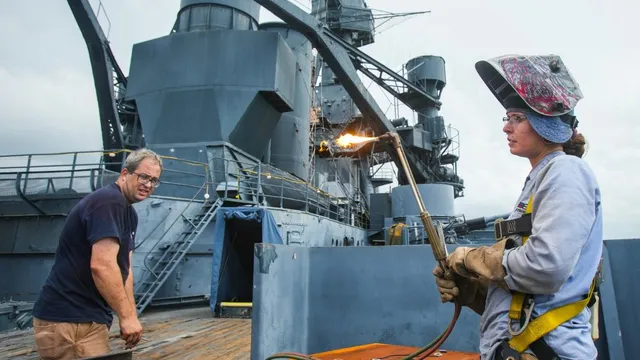
In the United States, the maritime industry is facing a significant labor shortage, with estimates indicating a need for an additional 200,000 to 250,000 workers over the next decade. This shortage is largely attributed to the physically demanding nature of shipyard jobs, which often involve long shifts and exposure to extreme weather conditions. As a result, attrition rates among shipyard workers have historically ranged from 20% to 22%, with some skilled trades experiencing turnover rates exceeding 30%. This high turnover poses a serious threat to the country's naval production capabilities, as defense leaders express concerns about the sustainability of the shipbuilding workforce.
The industry has seen a renewed push to revive U.S. shipbuilding, which has been declining for decades as production shifted to countries like Japan, South Korea, and China. In response to the labor shortage, companies are racing to recruit and retain skilled workers by offering competitive wages and benefits. For instance, JPMorgan recently announced a $24 million investment to support a new submarine manufacturing facility at the Philadelphia Navy Yard, while Saronic plans to provide production workers with benefits packages similar to those offered to software engineers, including equity compensation.
Despite the high wages—often exceeding $100,000 annually—many potential workers are deterred by the harsh working conditions. Employees can earn comparable wages in less demanding jobs, such as those at Amazon or gas stations like Buc-ee’s. This reality makes it challenging for shipyards to attract new talent, as many individuals are aware of alternative employment opportunities that offer similar pay without the associated physical demands.
To address the workforce gap, industry leaders emphasize the importance of investing in shipbuilding and creating pathways for young people to enter the maritime sector. Many high-demand jobs in this field do not require a four-year degree, and maritime academies across the country serve as a crucial entry point for aspiring workers. As the industry evolves, it is essential to change public perceptions of manufacturing careers to attract a new generation of skilled laborers who can help meet the growing demand for maritime services.