
Nicolás Maduro denies drug trafficking charges in US court
- Nicolás Maduro and his wife Cilia Flores were captured by U.S. forces in January 2026, facing serious charges in New York.
- Their attorney argues that U.S. sanctions are obstructing their right to access Venezuelan government funds for legal defense.
- The case highlights ongoing complexities in Venezuelan politics and international relations, impacting the future of Maduro's leadership.
Story
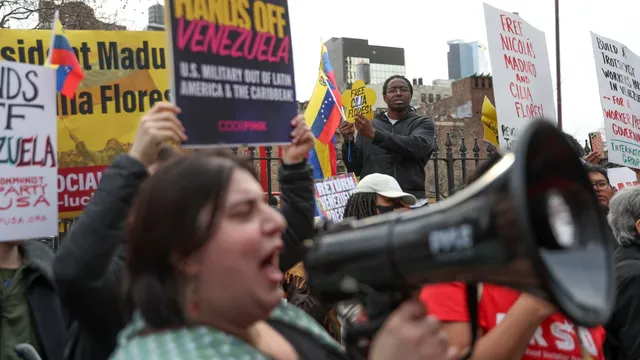
In January 2026, Nicolás Maduro, the former president of Venezuela, and his wife, Cilia Flores, were captured by U.S. military forces during a raid on their home in Caracas. They were subsequently transported to New York City, where they were arraigned on multiple serious charges, including drug trafficking and narco-terrorism. As part of the ongoing legal proceedings, both have denied the charges against them. The latest court hearing has become a focal point for debates surrounding their legal representation and the implications of U.S. sanctions on accessing Venezuelan government funds for defense costs. These restrictions have led their attorney, Barry Pollack, to argue in court that Maduro has a constitutional right to use government funds for his defense. Pollack claims that the current limitations violate Maduro and Flores's rights to a fair trial by obstructing their ability to adequately defend themselves. Prosecutors contend that access to these funds would pose risks to witnesses and ongoing investigations. Following their capture, both Maduro and Flores reported feeling the weight of their situation, as neither had requested to be released on bail and are being held in custody. The court has yet to set a trial date, and protesters rallied outside the courthouse, showcasing the polarized opinions surrounding Maduro’s leadership and capture. If found guilty, both face severe penalties, including the prospect of life imprisonment, which underscores the gravity of the accusations against them. The legal proceedings are taking place against a backdrop of significant political shifts within Venezuela, with the interim president, Delcy Rodríguez, leading the country after Maduro's ousting. Despite assertions of innocence, Maduro's position has become tenuous as his former allies navigate the challenges of governance in the wake of his capture, reflecting the complexities of Venezuelan politics amidst U.S. intervention.
Context
The economic situation in Venezuela has been profoundly affected by the imposition of U.S. sanctions over the past several years. These sanctions, primarily targeting the state-owned oil company PDVSA, aim to curtail the regime's ability to finance activities linked to human rights abuses and corruption. By restricting the country's primary source of income—oil exports—these measures have compounded existing economic challenges, resulting in a significant contraction of the Venezuelan economy. The sanctions have led to drastic reductions in oil production, which fell from about 3 million barrels per day in 2014 to below 800,000 barrels per day by early 2026. This sharp decline has triggered an acute lack of foreign currency, accelerating inflation and leading to hyperinflationary conditions that have ravaged the purchasing power of consumers in Venezuela, whose economy is heavily dollarized as a coping mechanism to the devaluation of the local currency, the bolívar. Moreover, the sanctions have strained Venezuela's import capacity, resulting in severe shortages of essential goods, including food, medicine, and other vital supplies. As the nation grapples with widespread malnutrition and deteriorating health services, arbitrary restrictions on international transactions have made it increasingly difficult for Venezuelan businesses to operate efficiently or source necessary inputs. The Venezuelan government has attempted to mitigate the impact of sanctions by seeking alliances with countries such as Russia and China, which have provided some economic relief. However, this support has not been sufficient to stave off the overall economic decline exacerbated by the ongoing sanctions. In addition to the direct economic implications, U.S. sanctions have also had significant social consequences. The popular discontent with the Venezuelan government has manifested in mass protests and increased emigration, as citizens flee the dire living conditions. According to estimates, more than six million Venezuelans have left the country since 2015, creating one of the largest displacement crises in the region. This exodus has profound implications for neighboring countries, stretching resources thin and creating socio-political tensions as they navigate the challenges of hosting large Venezuelan migrant populations. In conclusion, the U.S. sanctions have had a multifaceted impact on the Venezuelan economy, amplifying existing vulnerabilities and precipitating a humanitarian crisis. While aimed at promoting political change, the sanctions have arguably led to greater suffering for the Venezuelan populace, raising important ethical considerations and sparking debate around the efficacy of such measures. Moving forward, it is critical for the international community to reassess the strategy of sanctions in the context of humanitarian impacts and explore alternative pathways to support the Venezuelan people without exacerbating their struggles.
