

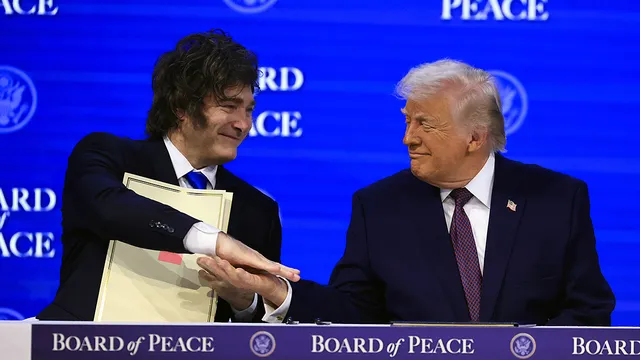
Argentina signs trade deal with US to boost economic ties
Argentina signs trade deal with US to boost economic ties
- Argentina has agreed to reduce tariffs on over 200 categories of goods from the U.S.
- The trade agreement includes multiple provisions for improved market access for U.S. exports.
- This partnership signifies Argentina's commitment to further integrate into the global economy.
Story
In a significant move to strengthen economic ties, Argentina finalized a trade agreement with the United States. The agreement was signed by Argentine Foreign Minister Pablo Quirno and U.S. Trade Representative Jamieson Greer in Washington, reflecting the policies of Argentine President Javier Milei aimed at opening the country’s protectionist economy. This deal involves the reduction or elimination of numerous tariffs on bilateral trade, specifically targeting American exports such as agricultural goods, chemicals, and machinery. Moreover, Argentina has committed to accepting U.S. standards for product safety, thereby aligning its regulations with those of the United States. The agreement signifies a pivotal step for Argentina, which has long sought to integrate more effectively into the global economy. By removing trade barriers on over 200 product categories, including sensitive imports like beef, dairy, and vehicles, Argentina is demonstrating its commitment to becoming a reliable trade partner. The agreement is also believed to enhance the nation’s reputation after years of economic struggles marked by defaulted debts and isolation from international markets. Moreover, the strategic cooperation detailed in the agreement includes provisions for not imposing customs duties on digital transmissions and a commitment against introducing taxes targeting U.S. technology firms. This aspect of the agreement underscores an intention to foster a favorable environment for American companies, especially in critical sectors such as technology and infrastructure. Milei’s government aims to ensure that U.S. investments in Argentina take precedence over those from countries that manipulate market conditions, specifically targeting nations like China. The political backdrop of this agreement cannot be ignored, as President Javier Milei has demonstrated a strong ideological alignment with U.S. President Donald Trump, furthering the bilateral relationship between the two countries. As a radical libertarian, Milei's administration has undergone major shifts to establish closer ties with the U.S., which includes frequent visits to Washington. The partnership, framed as a model for strengthening cooperation across the Americas, also opens Argentine markets to U.S. poultry and streamlines regulations for beef and pork exports. As both countries navigate the complexities of their respective domestic policies and political landscapes, the agreement serves as a milestone in redefining how Argentina engages with global economic structures. It remains to be seen how this trade deal will affect local industries and whether the anticipated influx of American goods will meet resistance from Argentine producers wary of competition. Nevertheless, the announcement is a clear signal of Argentina's desire to position itself as an open and competitive player in the international market.


