

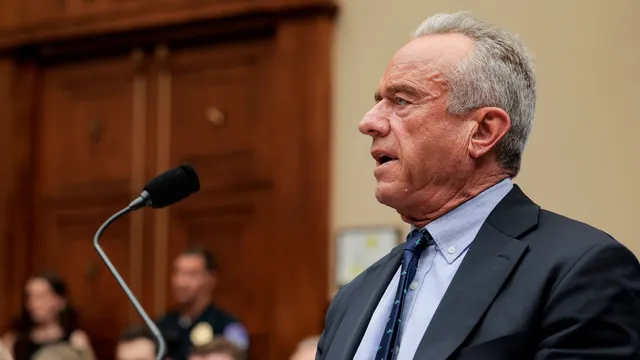
Kennedy faces backlash for vaccine policies in Congress
Kennedy faces backlash for vaccine policies in Congress
- Secretary Robert F. Kennedy Jr. testified before Congress regarding his health policies and vaccine strategies.
- Virginia voters decided on a constitutional amendment that could reshape the state’s congressional map.
- These events reflect ongoing tensions between health policy and political power dynamics in the U.S.
Story
In the United States, Health and Human Services Secretary Robert F. Kennedy Jr. testified before a Senate Appropriations subcommittee on April 22, 2026. His appearance followed significant scrutiny and criticism from Democratic lawmakers during previous hearings related to his stance on vaccines and the restructuring of federal health agencies. Kennedy has faced allegations of undermining public health initiatives over the past year, particularly concerning childhood vaccinations. The hearings have also highlighted changes he made to vaccine recommendations by replacing long-standing experts with individuals critical of vaccines, effectively altering the direction of public health policy. In Virginia, voters were set to decide on a constitutional amendment that could shape political power in the state. This amendment aimed to create a new congressional map that may allow Democrats to gain as many as four additional seats in the midterm elections. If approved, the proposed map would significantly favor the Democratic Party, potentially enabling them to secure ten out of eleven congressional districts, up from the current six held. The political clash over the redistricting in Virginia represents part of a larger national battle over congressional control in a divided House. This effort illustrates how both parties are actively working to strengthen their positions ahead of the midterms, deepening the contentious environment surrounding electoral processes in the country. With Virginia's history of competitive elections, this vote is particularly crucial for the Democrats as they navigate the redistricting battle that has evolved since prior cycles of political map reconfigurations. As for Secretary Kennedy, his actions as Health and Human Services Secretary are intertwined with broader discussions on public health and vaccine hesitancy. Polling reveals a significant distrust among the public regarding Kennedy's vaccine-related decisions. Critics argue that his leadership is steering the public health direction toward harmful outcomes, as evidenced by recent declines in vaccination rates. The uproar surrounding his tenure raises concerns about how vaccine policy will be shaped in the future, especially as the country grapples with a history of misinformation about vaccinations.


