

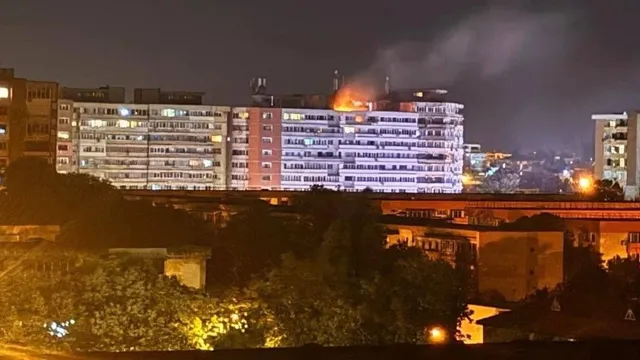
Russian drone injures two after crashing into Romanian apartment block
Russian drone injures two after crashing into Romanian apartment block
- A Russian drone crashed into a residential building in Galati, Romania, injuring two individuals.
- The drone struck the 10th floor, leading to a fire and the evacuation of about 70 residents.
- This incident marks a significant escalation in airspace violations, with Romania being concerned about its safety.
Story
On May 29, 2026, a drone, reportedly of Russian origin, crashed into a residential building in Galati, Romania, situated close to the Ukrainian border. The incident occurred when the drone, believed to be carrying explosives, struck the 10th floor of the apartment block, igniting a fire that required an emergency response from local authorities. Fortunately, emergency services, including firefighters and police, promptly evacuated around 70 residents from the building to ensure their safety. Medical personnel treated two individuals on-site: a woman who sustained first-degree burns and a teenage boy who experienced a panic attack as a result of the traumatic event. The Romanian General Inspectorate for Emergency Situations later confirmed that the drone's entire explosive payload went off upon impact, leading to significant structural damage and a fire that was subsequently contained. In light of repeated incidents of Russian drones straying into Romanian airspace, this marked a concerning escalation, as it was the first instance during which Romanian citizens reportedly suffered injuries due to such an incident. The Romanian Defense Ministry issued a statement emphasizing that they had scrambled two F-16 fighter jets to respond to the detected drones in the area. The drone had been tracked by radar until it ultimately crashed. Romania has previously raised concerns about Russian drones violating its airspace, noting that fragments of drones have been discovered in the country numerous times since the commencement of the Ukraine war. The latest incident intensified the scrutiny surrounding airspace violations and the implications for Romanian security, further highlighting geopolitical tensions in the region as the war in Ukraine continues to unfold. The ramifications of this event may lead to heightened military readiness and further diplomatic tensions between Romania, NATO, and Russia.
Context
The impact of drone strikes on Romania's security is a multifaceted issue that necessitates a comprehensive understanding of both the geopolitical landscape and the implications of targeted military operations. As a member of the European Union and NATO, Romania is strategically positioned in Eastern Europe, bordering countries that have been subject to various conflicts and security challenges. The presence of drone strikes in nearby regions raises concerns about the potential for spillover effects, including the destabilization of regional security. The increase in drone warfare signifies a shift towards more precise military engagements, which can enhance national security by targeting threats more efficiently. However, the consequences of such operations must also be carefully evaluated. From a strategic standpoint, Romania's geographic location places it at a potential crossroads for conflict, particularly given the tensions involving Russia and the ongoing instability in areas such as Ukraine. The frequency of drone strikes in these neighboring regions may serve to deter aggressive actions by hostile entities, thereby indirectly safeguarding Romanian borders. Moreover, Romania's alignment with NATO can bolster its defensive posture and enhance its intelligence capabilities, creating a more resilient security framework against potential insurgent threats. However, the reliance on drone technology also poses complex ethical questions regarding civilian casualties and international law compliance, which must be weighed against the operational benefits. Additionally, the psychological aspect of drone warfare cannot be overlooked. While these strikes may effectively neutralize high-profile targets, they may also engender fear and distrust among local populations in the vicinity of operations. Such outcomes can lead to radicalization and resistance against both the Romanian state and its allies. Furthermore, the visibility and media coverage surrounding drone strikes can impact public perception, potentially undermining support for military operations and complicating political relations with neighboring states. Thus, the public discourse surrounding military strikes needs to be managed strategically to maintain domestic support and regional stability. In conclusion, while drone strikes may provide Romania with a tactical advantage in addressing immediate threats, their long-term implications require careful consideration. The balance between enhancing national security and managing the sociopolitical ramifications of drone warfare is delicate. Policymakers must thoroughly evaluate the effectiveness and ethical dimensions of drone operations while also fostering visibility and cautious engagement with the affected communities to mitigate backlash. Ultimately, the impact of drone strikes on Romania's security encapsulates the complexities of modern warfare and the need for a nuanced approach to international relations.


