
politics
impactful
controversial

Kim Jong Un announces nuclear plans at upcoming congress

Jan 28, 2026, 2:29 AM30
(Update: Jan 30, 2026, 7:00 AM)
global international and intergovernmental organization
sovereign state in East Asia

Kim Jong Un announces nuclear plans at upcoming congress

  • North Korea's ruling party congress is expected to clarify future strategies for nuclear deterrence.
  • Kim Jong Un observed a successful ballistic missile test in January 2026 and emphasized strategic importance.
  • The upcoming events may escalate military tensions in the region, leading to heightened global security concerns.
Share your opinion
3

Story

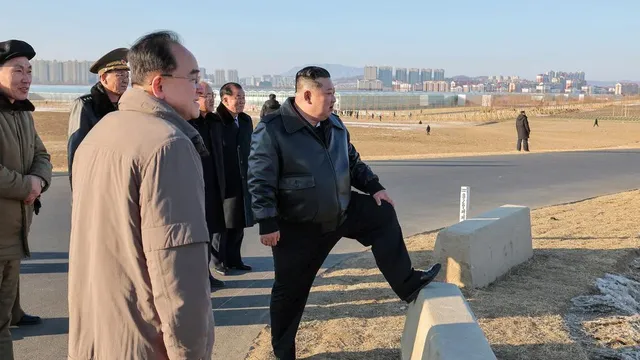
In North Korea, the ruling Workers' Party is set to hold its first congress in five years, with plans to further enhance the country’s nuclear capabilities. On January 27, 2026, North Korean leader Kim Jong Un oversaw a successful ballistic missile test, declaring its significance in expanding the nation's strategic deterrent. The test involved a large-caliber multiple rocket launcher and had a range that hit a target over 350 kilometers away. Ahead of the congress, Kim stated that it would unveil the next-stage plans for bolstering the nuclear arsenal, which analysts believe focuses on maximizing operational prowess and addressing threats from adversaries. The congress is anticipated to showcase the North's military advancements and will highlight Kim's commitment to enhancing defense capabilities using different missile systems. Among the various launches this month, Kim has previously criticized the arms development initiatives of South Korea, framing them as threats that North Korea must counter. Pentagon officials continue to emphasize the alliance with South Korea, particularly since U.S. troops remain stationed in the region as a deterrence strategy against North Korea's nuclear ambitions. With growing tension in the Korean Peninsula, experts are monitoring the implications of these advancements for regional security and international diplomatic efforts surrounding denuclearization. Furthermore, there is speculation about the future direction of North Korea's nuclear technology advancements. Concerns have been raised regarding the country's ability to develop systems capable of circumventing enemy missile defenses, and achieving the capacity to deliver multiple warheads on single missile systems represents a critical component in advancing military effectiveness. As North Korea exhibits its missile capabilities, corresponding actions by the United States and its allies may redefine regional threat assessments and responses, keeping the importance of discussions around denuclearization in focus at international forums.

Context

The significance of the North Korea Workers' Party congress cannot be overstated, particularly in the context of North Korea's political landscape and its impact on regional and global relations. The congress serves as a platform for consolidating power, setting political agendas, and addressing key issues that affect not only the ruling party but the nation as a whole. Historically, these congresses have been pivotal events where leadership transitions occur and policy directions are established, precisely reflecting the ideologies endorsed by the Supreme Leader. The congress, therefore, is integral to understanding the governing dynamics and future trajectory of North Korea. In recent years, North Korea's Workers' Party congress has been characterized by a focus on economic development and military strength. The emphasis on self-reliance aligns with the country's long-standing juche ideology, which promotes independence from foreign influences. By prioritizing domestic production and development, the leadership aims to bolster national confidence and reduce vulnerabilities that could arise from external sanctions or geopolitical pressures. The congress also serves to reinforce Kim Jong Un's control over the party and the military, showcasing loyalty among high-ranking officials and securing his position at the helm of the country. Moreover, the proceedings of the Workers' Party congress often draw international attention, given North Korea's contentious relationships with neighboring countries and global powers. The outcomes and declarations made during these gatherings can influence diplomatic relations, particularly with the United States and South Korea. For instance, statements regarding nuclear development or military capabilities can provoke reactions from the international community, potentially leading to renewed tensions or efforts at negotiation. As such, monitoring the congress outcomes provides insights into North Korea's strategic calculations and responses to evolving regional dynamics. Additionally, the political messaging conveyed through the congress reflects broader themes within North Korean society, including national pride, resilience against perceived threats, and the importance of unity. This messaging serves to rally support from the populace while also reinforcing the legitimacy of the regime. The congress can also act as a litmus test for internal stability, showcasing the party's ability to navigate challenges and maintain an image of strength. Overall, the Workers' Party congress is a critical event that encapsulates North Korea's political ethos, setting the stage for future developments while serving as a barometer for both internal cohesion and external relations.

2026 All rights reserved
