

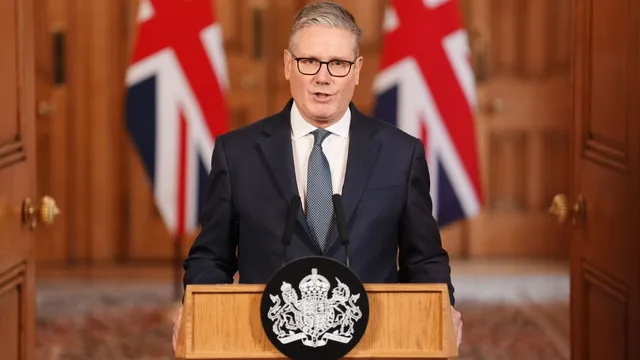
Starmer allows US use of UK bases amid escalating Iran conflict
Starmer allows US use of UK bases amid escalating Iran conflict
- Keir Starmer faced significant criticism for his initial stance on military action against Iran.
- Under growing pressure, he has allowed the U.S. to use UK military bases for operations.
- Starmer's decision aims to manage Britain's interests and uphold international law amidst a global crisis.
Story
In recent days, the situation regarding military actions in Iran has escalated significantly, prompting a shift in the UK government's stance under the leadership of Prime Minister Keir Starmer. Following a string of pressures and criticisms surrounding the government's initial reluctance to support American operations, Starmer has opted to permit the use of British military bases, including RAF Fairford and Diego Garcia, for U.S. strikes aimed at Iran. This decision reflects a strategic attempt to balance national interests and avoid larger geopolitical repercussions. Starmer's previous criticism of military intervention in the region considered the risks of destabilization and security threats not only to the UK but to broader international relations. The recent bombing operations undertaken by the U.S. and Israel targeted Iranian military installations after a series of aggressive actions taken by Iran in the Gulf area. The decision came after the UK faced criticism, both domestically and internationally, particularly from allies like the U.S., who expressed disappointment at the British government's hesitance. As the conflict unfolds, the leadership within the Labour Party, which had recently faced setbacks, now stands at a pivotal moment where Starmer's decisions could either bolster or weaken his position amid calls for decisive action against Iranian aggression. With the backdrop of a global crisis, Starmer's pragmatic approach may lead to a reconsideration of his leadership, as maintaining strong leadership during such turmoil is deemed crucial by many political observers. Amid ongoing tensions, Starmer's capacity to navigate the situation is critical for Britain's standing both in diplomacy and in domestic political stability.
Context
The impact of the ongoing conflict involving Iran has significantly shaped the foreign policy of the United Kingdom in recent years. The UK government has faced a multifaceted challenge in responding to Iran's aggressive posture in the Middle East, which includes its nuclear ambitions, its support for proxy groups, and its involvement in regional conflicts such as those in Syria and Yemen. As a result, UK foreign policy has had to navigate the complex landscape of international relations, balancing the need to respond to Iranian threats while maintaining alliances with other nations, particularly the United States and European partners. The ramifications of the Iran conflict have prompted the UK to reassess its strategic priorities, emphasizing the need for a coherent approach towards Tehran that incorporates both diplomatic engagement and deterrence strategies to ensure regional stability while protecting its national interests. In the context of the Iran nuclear deal, formally known as the Joint Comprehensive Plan of Action (JCPOA), the UK has played a pivotal role in coordinating with its European allies. However, the US withdrawal from the deal in 2018 under the Trump administration, coupled with Iran's subsequent escalations in its nuclear activities, necessitated a critical evaluation of the UK’s involvement and its broader vision for Middle Eastern policy. The UK’s foreign office has sought to re-engage Iran through diplomatic channels, pushing for a renewed commitment to non-proliferation and stability in the region. However, this approach faces challenges due to the UK's own domestic political pressures and the shifting landscape of alliances in the Middle East as countries re-evaluate their positions in light of Iran's actions. Moreover, the legacy of past conflicts, particularly in Iraq and Afghanistan, continues to influence UK military and diplomatic endeavors in the region. The UK has been cautious in its military commitments, particularly after facing domestic backlash over previous interventions. The UK's foreign policy now leans towards supporting localized solutions through partnerships and coalitions, rather than direct military engagement. This is particularly important in the context of Iran's influence in Iraq, where the UK seeks to support the Iraqi government while also countering Iranian interference. Balancing these dual objectives requires a nuanced understanding of the intricate web of local and regional politics, which the UK aims to navigate through careful diplomacy and strategic alliances. In conclusion, the conflict concerning Iran has necessitated a recalibration of the UK’s foreign policy, emphasizing a blend of diplomacy, strategic deterrence, and regional collaboration. As the situation evolves, the UK must remain agile in its responses, ensuring that its policies not only reflect immediate security concerns but also contribute to long-term stability in the Middle East. The effectiveness of UK foreign policy will largely depend on its ability to coordinate with international partners, leverage diplomatic channels, and engage constructively with Iran to mitigate risks while promoting peace and security within the region.


